.png)
.png)


Excavator Track Roller Repair: Is Repairing Always the Right Choice for Heavy-Duty Fleets?
January 23, 2026
Excavator track roller repair is a recurring decision point for fleet managers, maintenance directors, and procurement teams operating in construction, mining, and earthmoving industries. The short answer to whether repair is always the right choice is no. While repair can extend service life and reduce short-term costs in certain cases, improper assessment may lead to higher downtime, safety risks, and escalating maintenance expenses.
Understanding when excavator track roller repair makes technical and economic sense requires more than surface-level inspection. This article explains repair feasibility, failure modes, cost considerations, and decision frameworks using real-world heavy-duty applications to help B2B buyers make informed, lifecycle-focused choices.
What Role Do Track Rollers Play in Excavator Undercarriage Systems?
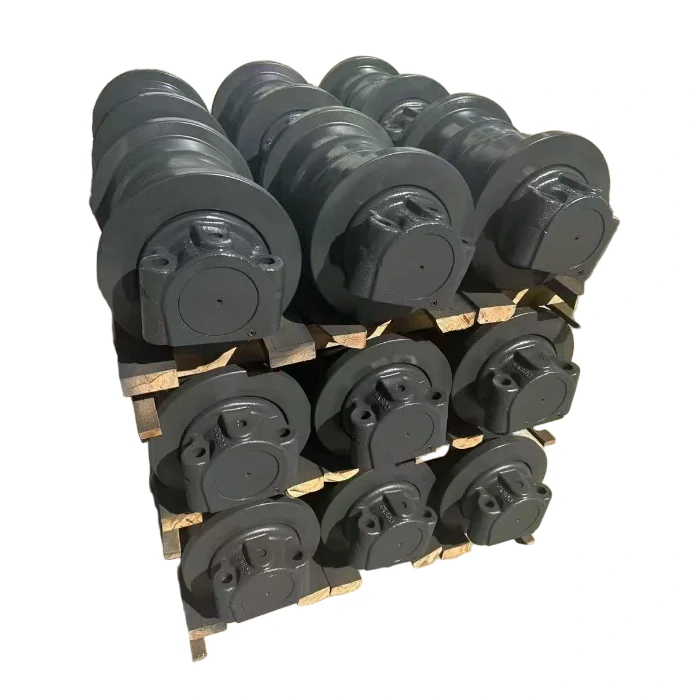
Track rollers are load-bearing components located beneath the excavator frame, designed to support machine weight and guide track movement along the undercarriage.
Structural Function in Load Distribution
Track rollers distribute the excavator’s operating weight evenly across the track chain, minimizing localized stress and preventing excessive wear on links and bushings. In high-load conditions, improper roller function can accelerate undercarriage degradation.
Interaction With Other Undercarriage Components
Track rollers operate as part of integrated roller track systems, working alongside idlers, sprockets, and track chains. Failure in one roller often creates a cascade effect, increasing stress on adjacent components.
When Is Excavator Track Roller Repair Technically Feasible?
Not all damaged rollers are suitable for repair. Feasibility depends on wear patterns, structural integrity, and operating conditions.
Repairable Conditions
Track roller repair may be viable when:
- Surface wear remains within allowable limits
- Internal bearings are intact
- Shafts show no bending or fatigue cracking
- Seals can be replaced without housing deformation
In these cases, repair typically involves resurfacing, seal replacement, and re-lubrication.
Non-Repairable Conditions
Repair is not recommended when:
- Roller shells show deep cracks or pitting
- Shafts are bent or fractured
- Bearing seats are worn beyond tolerance
- Repeated seal failures indicate housing distortion
In such scenarios, replacement of the track roller is usually the more reliable option.
What Are the Risks of Improper Track Roller Repair?
While repair can reduce upfront costs, improper or poorly executed repair introduces hidden operational risks.
Increased Downtime
Repaired rollers with compromised structural integrity may fail prematurely, leading to unexpected equipment downtime and secondary damage to track chains or frames.
Safety and Performance Concerns
In heavy-duty environments, track roller failure can destabilize machine movement, especially on slopes or uneven terrain, posing safety risks to operators and nearby personnel.
Total Cost of Ownership Implications
Short-term savings from repair may be offset by higher long-term costs due to frequent maintenance, increased fuel consumption, and accelerated wear on other undercarriage components.
How Should Fleet Managers Decide Between Repair and Replacement?
Decision-making should follow a structured technical and economic evaluation rather than a cost-only approach.
Key Evaluation Factors
- Remaining service life after repair
- Machine application intensity
- Availability of replacement parts
- Downtime cost per hour
- Safety and compliance requirements
Model-Specific Considerations
For large crawler machines such as Komatsu dozers, component scale and operating loads significantly affect repair viability. For example, heavy-duty options like the D65 track roller are designed to withstand high axial and radial loads, making replacement more predictable in long-cycle operations.
Similarly, in extreme-duty environments, upgrading to reinforced components such as the D80 track roller often delivers better lifecycle economics than repeated repairs.
For fleet-specific assessments or repair-versus-replacement evaluations, you can contact our technical team to review operating conditions and cost models in detail.
Cost Comparison: Repair vs Replacement of Track Rollers
Table 1: Comparative Analysis of Excavator Track Roller Repair vs Replacement
| Evaluation Criteria | Repair | Replacement |
|---|---|---|
| Initial Cost | Lower | Higher |
| Service Life | Limited | Full lifecycle |
| Downtime Risk | Medium to High | Low |
| Reliability | Variable | Consistent |
| Suitability for Heavy Duty | Limited | High |
Best Practices for Extending Track Roller Service Life
Regardless of whether repair or replacement is chosen, proactive maintenance remains essential.
Preventive Maintenance Strategies
- Regular undercarriage inspections
- Proper track tension adjustment
- Cleaning debris and abrasive materials
- Monitoring lubrication integrity
Environmental Considerations
Operations in abrasive soil, high-moisture environments, or extreme temperatures significantly shorten roller lifespan, making preventive measures even more critical.
FAQ: Excavator Track Roller Repair
How long does a repaired track roller typically last?
Service life varies based on repair quality and operating conditions, but it is generally shorter than a new component’s lifecycle.
Is excavator track roller repair suitable for mining applications?
In most mining environments, replacement is preferred due to high load intensity and continuous operation.
Can repaired rollers damage other undercarriage parts?
Yes. Improperly repaired rollers can increase wear on tracks, sprockets, and frames.
Should repair decisions be standardized across a fleet?
Not necessarily. Decisions should be based on machine size, duty cycle, and application severity.
About Tianzhong Machinery
Tianzhong Machinery is a professional truck parts supplier specializing in undercarriage components for heavy-duty equipment. With a strong focus on precision manufacturing, material quality, and application-driven engineering, Tianzhong Machinery provides reliable track rollers and related components designed to meet the performance and durability expectations of global construction and mining operations.
References
- Wikipedia – Continuous track
https://en.wikipedia.org/wiki/Continuous_track - Caterpillar – Undercarriage Maintenance Guidelines
- ISO 281 – Rolling Bearings: Dynamic Load Ratings
https://www.iso.org/standard/38101.html