.png)
.png)



¿Cuánto cuestan los soportes de motor? Un desglose basado en datos de los precios de 2025 para camiones
25 de diciembre de 2025
Resumen
La sustitución de los soportes del motor en los camiones comerciales representa un importante evento de mantenimiento, en cuyo coste influye una compleja interacción de variables. Este análisis examina las implicaciones financieras de esta reparación en el contexto del mercado de 2025, proporcionando un desglose completo para los operadores de vehículos y los gestores de flotas. Descompone el gasto total en sus partes constituyentes: el coste del propio soporte -diferenciando entre las variantes estándar de goma, poliuretano e hidráulica- y los gastos de mano de obra asociados. La investigación revela que los costes de las piezas pueden oscilar entre menos de cien y varios cientos de dólares por unidad, mientras que la mano de obra puede añadir entre cien y más de quinientos dólares adicionales, dependiendo de la complejidad del vehículo y de factores económicos regionales. El estudio tiene en cuenta la influencia de la marca y el modelo del camión, la elección entre piezas del fabricante de equipos originales (OEM) y piezas de recambio, y la ubicación geográfica en la factura final. En última instancia, este examen sirve de guía financiera detallada, que permite tomar decisiones informadas para mantener la integridad y el rendimiento de los vehículos pesados.
Principales conclusiones
- Presupueste entre $200 y $800+ para una sustitución profesional del soporte del motor del camión.
- La mano de obra suele costar más que la pieza debido a procedimientos complejos y lentos.
- Los soportes hidráulicos y activos son bastante más caros que los de goma estándar.
- Para saber cuánto cuestan los soportes de motor hay que tener en cuenta el modelo específico de su camión.
- Elegir piezas de recambio de calidad puede ofrecer un equilibrio entre rendimiento y valor.
- Retrasar la sustitución puede provocar daños colaterales más graves y costosos.
- Inspeccione periódicamente los soportes para detectar el desgaste a tiempo y prever gastos futuros.
Índice
- El papel fundamental del soporte del motor en la integridad del vehículo
- Un desglose financiero de 2025: Los costes básicos de la sustitución de la bancada del motor
- Variables clave que influyen en el coste final de sustitución
- Toma de decisiones estratégicas para la sustitución de la bancada del motor
- La propuesta de valor a largo plazo de los soportes de motor de calidad
- Preguntas más frecuentes (FAQ)
- Conclusión
- Referencias
El papel fundamental del soporte del motor en la integridad del vehículo
Para comprender realmente las implicaciones financieras de la sustitución de un soporte de motor, primero debemos desarrollar una comprensión empática de su propósito. No se trata simplemente de un soporte estático o de una simple pieza de ferretería. Por el contrario, se podría concebir el soporte del motor como una articulación vital en el sistema esquelético del vehículo, un mediador sofisticado encargado de un doble, y a menudo contradictorio, mandato: anclar firmemente la inmensa masa de la cadena cinemática al chasis del camión y, al mismo tiempo, aislar la cabina y el bastidor de las vibraciones inherentes, y a menudo violentas, del motor.
Más que un simple soporte: La función de los soportes de motor
Un motor de combustión interna es una fuente de inmensas fuerzas de torsión y vibraciones. Cada disparo de un cilindro envía una onda de choque a través del bloque motor. La principal responsabilidad del soporte del motor es absorber y amortiguar estas fuerzas, un proceso conocido como control del ruido, la vibración y la dureza (NVH). Sin unos soportes eficaces, el vehículo se vería sometido a un temblor incesante, que no sólo resultaría profundamente incómodo para el operador, sino que también crearía una cascada de tensiones mecánicas en otros componentes, desde la electrónica del salpicadero hasta las piezas centrales del tren de rodaje (Driver and Vehicle Standards Agency, 2024).
Además, el soporte del motor debe gestionar el par motor. Al acelerar, el motor intenta girar en la dirección opuesta a la rotación del cigüeñal. Los soportes resisten este movimiento, asegurando que la potencia del motor se transfiera eficientemente a través de la transmisión y a las ruedas, en lugar de desperdiciarse en balancear el bloque motor. En este sentido, un soporte sano es fundamental para el rendimiento y la capacidad de respuesta del vehículo.
Una sinfonía de materiales: Soportes de goma, poliuretano e hidráulicos
La diversidad de diseños de soportes de motor refleja las diferentes exigencias que les imponen los distintos tipos de vehículos. La elección del material y el diseño es un compromiso de ingeniería deliberado entre durabilidad, rendimiento y absorción de vibraciones.
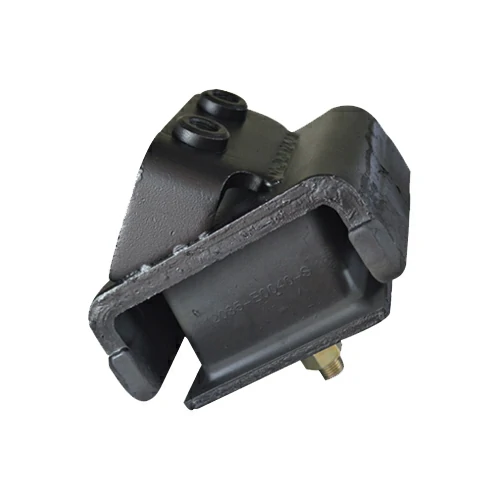
- Soportes de goma maciza: Es el diseño más tradicional y, a menudo, el más asequible. Consta de dos puntos de fijación metálicos unidos por un bloque de caucho endurecido. El caucho absorbe eficazmente un amplio espectro de vibraciones y es bastante duradero. Su sencillez es su punto fuerte, ya que ofrece una solución fiable y rentable para muchas aplicaciones estándar.
- Soportes de poliuretano: El poliuretano es un polímero mucho más rígido que el caucho y se utiliza a menudo en aplicaciones de alto rendimiento o de uso intensivo. Esta rigidez proporciona un control superior sobre el par y el movimiento del motor, lo que puede traducirse en una transferencia más directa de la potencia. La contrapartida, sin embargo, es una reducción de la amortiguación de las vibraciones. Una mayor parte de la dureza del motor se transfiere al chasis, lo que puede resultar indeseable en camiones de largo recorrido en los que la comodidad del operador es primordial.
- Soportes hidráulicos (Hydro): Éstas son mucho más complejas y representan un importante avance tecnológico. Un soporte hidráulico contiene una cámara llena de líquido a base de glicol. Cuando el motor vibra, el fluido es forzado a través de pequeños canales y orificios diseñados con precisión dentro del soporte. Esta acción disipa la energía vibratoria en forma de calor, proporcionando una amortiguación excepcionalmente suave. Algunos diseños avanzados son "activos" o "conmutables", y utilizan controles electrónicos o de vacío para cambiar las características de flujo del fluido, alterando de forma efectiva la rigidez del soporte en tiempo real para adaptarse a las diferentes velocidades y cargas del motor. Ofrecen lo mejor de ambos mundos (suavidad al ralentí y rigidez bajo carga), pero con un aumento considerable de la complejidad y el coste.
Las señales silenciosas: Cómo reconocer el fallo de un soporte de motor
Un soporte de motor rara vez falla de forma catastrófica sin previo aviso. Normalmente se degrada con el tiempo, proporcionando una serie de pistas sensoriales que un operador atento puede detectar. Reconocer estas señales es el primer paso para gestionar el coste de una reparación inminente.
- Vibración excesiva: Este es el síntoma más común. Si empiezas a sentir una vibración poco característica a través del volante, el suelo o el asiento, especialmente cuando el vehículo está al ralentí en marcha, un soporte desgastado es el principal sospechoso. La goma o el líquido que antes absorbía estas vibraciones ha perdido su integridad.
- Ruidos de impacto: Un "ruido seco" o "sordo" al acelerar, desacelerar o al cambiar de marcha es un signo revelador. Este ruido se debe a que el bloque motor se desplaza excesivamente y entra en contacto con otra parte del chasis porque el soporte ya no lo sujeta correctamente.
- Daño visual: A veces, una simple inspección visual puede revelar el problema. Busque grietas profundas, roturas o separaciones en la goma del soporte. En el caso de los soportes hidráulicos, cualquier signo de fuga de fluido es una indicación definitiva de fallo. El soporte también puede parecer hundido o colapsado bajo el peso del motor.
- Desalineación del motor: En casos graves, un soporte defectuoso puede permitir que el motor se hunda o se asiente en ángulo. Esto puede ejercer presión sobre las mangueras, el cableado y los componentes de la transmisión, como el árbol de transmisión, lo que puede provocar una serie de averías secundarias.
Un desglose financiero de 2025: Los costes básicos de la sustitución de la bancada del motor
Una vez establecido el "por qué", podemos pasar a la pregunta central: ¿cuánto cuesta sustituir los soportes del motor en 2025? El gasto total es una suma de dos componentes principales: el coste de la pieza en sí y el coste de la mano de obra cualificada necesaria para instalarla. Examinaremos cada uno de ellos por separado. Es fundamental enfocar esto como una estimación, ya que las cifras exactas están sujetas a las muchas variables que discutiremos más adelante.
Tabla 1: Análisis comparativo de los tipos de bancadas de motor
| Característica | Soporte de goma estándar | Soporte de poliuretano | Montaje hidráulico |
|---|---|---|---|
| Material primario | Goma endurecida | Poliuretano Polímero | Caucho, metal, fluido hidráulico |
| Amortiguación de vibraciones | Bien | Feria | Excelente |
| Sensación de rendimiento | Estándar | Empresa / Directo | Suave / Adaptable |
| Coste medio de las piezas | $50 – $150 | $70 – $200 | $150 – $500+ |
| Complejidad | Bajo | Bajo | Alta |
| Aplicación típica | Camiones estándar, económicos | Rendimiento, alta resistencia | Camiones modernos y de lujo |
El precio de la pieza: ¿Cuánto cuestan los soportes de motor?
El coste del soporte físico del motor es la parte más sencilla de la ecuación, aunque varía drásticamente en función del tipo y la calidad.
- Soportes de goma estándar: Para muchos modelos comunes de camiones ligeros y medianos, un soporte de goma estándar del mercado de accesorios puede ser sorprendentemente asequible. Los precios en 2025 suelen oscilar entre $50 a $150 por soporte. Piezas de fabricantes de equipos originales (OEM) de marcas como [Volvo Trucks]() o Komatsu tendrán una prima, que a menudo se sitúa en el extremo superior de esta gama o ligeramente por encima.
- Soportes de poliuretano: Dada su naturaleza más especializada, los soportes de poliuretano son ligeramente más caros, costando generalmente entre 1.000 y 1.000 euros. $70 y $200. El precio refleja la mayor complejidad del proceso de fabricación y los menores volúmenes de producción en comparación con el caucho estándar.
- Soportes hidráulicos y activos: En este caso, el coste aumenta considerablemente. La compleja valvulería interna y las cámaras de fluido hacen que estas piezas sean intrínsecamente más caras de producir. Un montaje hidráulico estándar para un camión moderno puede costar fácilmente $150 a $400. En el caso de los soportes activos controlados electrónicamente, el precio puede dispararse hasta el $500 o más para una sola unidad. Estos soportes integran sensores y actuadores, desdibujando la línea que separa una simple pieza mecánica de un componente electrónico.
La ecuación laboral: Tiempo, cualificación y variaciones regionales de los tipos de interés
Para muchos propietarios de vehículos, el coste de la mano de obra será la mayor parte de la factura final. Esto se debe a que la sustitución de un soporte de motor es a menudo un proceso intensivo en mano de obra que requiere habilidad, herramientas especializadas, y una cantidad significativa de tiempo.
La duración de la sustitución de un soporte de motor puede oscilar entre una hora y media y más de cinco horas. El proceso implica generalmente:
- Apoyar con seguridad el peso del motor'desde arriba con un elevador de motor o desde abajo con un gato especializado.
- Retirar cualquier componente que obstruya el acceso al soporte, lo que podría incluir piezas de escape, varillajes de dirección o incluso partes del subchasis.
- Desatornillar y retirar el soporte antiguo.
- Instalar el nuevo soporte y asegurarse de que está correctamente alineado.
- Volver a instalar todos los componentes retirados anteriormente.
- Volver a bajar el motor sobre el nuevo soporte y apretar todos los tornillos según las especificaciones del fabricante.
Las tarifas laborales de los mecánicos cualificados de camiones en 2025 varían mucho en todo el mundo. En Norteamérica o Europa Occidental, las tasas de $100 a $200 por hora son comunes. En algunas partes del sudeste asiático, Sudamérica o África, las tasas pueden ser sustancialmente más bajas, quizás del orden de 1.000 millones de euros. $40 a $90 por hora. Por lo tanto, un trabajo de 3 horas puede costar $300 en una región y más de $600 en otra por exactamente la misma reparación.
Cuadro 2: Estimación del coste total de sustitución desglosado (2025)
| Tipo de camión | Tipo de montaje | Coste de la pieza (por montaje) | Horas de trabajo | Coste estimado de la mano de obra (@$120/hr) | Total estimado (por montaje) |
|---|---|---|---|---|---|
| Carga media (por ejemplo, Ford F-450) | Goma | $80 – $160 | 1.5 – 2.5 | $180 – $300 | $260 – $460 |
| Carga pesada (por ejemplo, Kenworth W900) | Caucho/Poliéster | $120 – $250 | 2.0 – 4.0 | $240 – $480 | $360 – $730 |
| Pesados modernos (por ejemplo, Volvo VNL) | Hidráulico | $200 – $450 | 2.5 – 5.0 | $300 – $600 | $500 – $1,050 |
| Especializado/Alto rendimiento | Activo/Electrónico | $400 – $700+ | 3.0 – 5.0+ | $360 – $600+ | $760 – $1,300+ |
Nota: Estas cifras son estimaciones para la sustitución de un solo soporte. La mayoría de los camiones tienen al menos dos soportes de motor y a menudo un soporte de transmisión, que con frecuencia se sustituye al mismo tiempo. Los costes son ilustrativos y pueden variar significativamente.
Variables clave que influyen en el coste final de sustitución
Las tablas anteriores proporcionan una referencia útil, pero el precio real que pague estará influido por un conjunto específico de circunstancias relacionadas con su vehículo y sus elecciones. Un examen minucioso de estos factores es esencial para elaborar un presupuesto preciso.
Especificaciones del vehículo: Marca, modelo y año del camión
El diseño del vehículo es sin duda el factor más importante. Piensa en la diferencia entre un camión clásico y sencillo con un motor longitudinal y un amplio espacio en el vano motor frente a un diseño moderno con cabina sobre motor repleto de equipos de emisiones y electrónica.
- Accesibilidad: En algunos camiones, es relativamente fácil acceder a los soportes del motor. En otros, el mecánico puede tener que desmontar el eje delantero, el colector de escape o incluso inclinar toda la cabina para llegar a los tornillos. Cuantos más componentes haya que desmontar, mayor será el coste de la mano de obra.
- Configuración del motor: Los motores montados transversalmente (lateralmente), aunque son menos comunes en los camiones grandes, a menudo presentan mayores desafíos para la sustitución del montaje que las disposiciones longitudinales tradicionales.
- Transmisión: Un camión con tracción a las cuatro ruedas puede tener ejes de transmisión delanteros y un diferencial que obstruyan el acceso a los soportes, lo que añade tiempo de trabajo en comparación con un equivalente con tracción a las dos ruedas.
El debate OEM vs. Aftermarket
A la hora de adquirir la pieza, se enfrenta a una elección crítica: ¿OEM o posventa?
- Piezas OEM (Original Equipment Manufacturer): Se trata de las mismas piezas con las que se construyó el camión, suministradas por el fabricante del vehículo como Hyva o su proveedor directo. Garantizan un ajuste perfecto y unas características de funcionamiento originales. El inconveniente es su mayor coste. Son la referencia de calidad y suelen recomendarse para montajes hidráulicos o activos complejos en los que la ingeniería precisa es primordial.
- Piezas de recambio: Estas piezas son fabricadas por empresas que no son los proveedores originales. La calidad puede variar de excelente a deficiente. Las marcas reputadas de recambios suelen producir piezas que cumplen o incluso superan las especificaciones del fabricante original, y a veces ofrecen mejoras de diseño con respecto al original. Casi siempre son más asequibles que las piezas originales. Para un soporte de goma estándar en un camión antiguo, una pieza de recambio de calidad de una marca de confianza puede ser una buena opción. fabricante de piezas para camiones puede ser una opción muy sensata y rentable. El riesgo reside en las piezas de baja calidad y sin marca, que pueden utilizar materiales inferiores que fallarán prematuramente, anulando cualquier ahorro inicial.
La lotería geográfica: cómo influye la ubicación en los costes laborales
Como ya se ha dicho, el lugar donde se realiza el trabajo tiene una enorme repercusión. La mano de obra depende del coste de la vida local, los gastos generales del taller (alquiler, seguros, impuestos) y la disponibilidad de técnicos cualificados. Un taller de un gran centro metropolitano como Londres o Singapur cobrará invariablemente más por hora que uno de una zona rural. Este factor por sí solo puede alterar la factura final en cientos de dólares.
El efecto "mientras tú'estás ahí": Reparaciones asociadas
Un mecánico prudente inspeccionará los componentes relacionados durante la sustitución del soporte del motor. Es habitual sustituir el soporte de la transmisión al mismo tiempo que los soportes del motor. Dado que el tren de potencia ya está siendo apoyado y manipulado, el trabajo adicional para cambiar el soporte de la transmisión es a menudo mínimo, por lo que es económicamente prudente.
Además, el técnico puede descubrir otros problemas causados por el soporte defectuoso o que simplemente se hicieron evidentes durante el trabajo. Un soporte desgastado podría haber permitido que el motor se desplazara y dañara una manguera de refrigerante, un mazo de cables o un tubo flexible de escape. Tratar estos "objetivos de oportunidad" aumenta el coste total, pero evita una avería futura y una reparación más costosa en el futuro.
Toma de decisiones estratégicas para la sustitución de la bancada del motor
Con un conocimiento más profundo de los costes y las variables, ahora puede abordar la reparación de forma estratégica en lugar de reactiva. Sus decisiones pueden influir significativamente tanto en el coste inmediato como en la salud a largo plazo de su vehículo.
El dilema del bricolaje: ¿es un trabajo para el mecánico casero?
Para el mecánico casero experimentado con las herramientas adecuadas, sustituir un simple soporte de goma del motor en un camión más antiguo y accesible puede ser un proyecto factible de fin de semana. El ahorro potencial en mano de obra es considerable. Sin embargo, uno debe acercarse a esto con precaución y una auto-evaluación honesta de uno's habilidades y equipos.
Necesitarás:
- Un gato de suelo resistente y soportes para gatos.
- Un elevador de motor o una barra de soporte de motor especializada.
- Un completo juego de llaves de vaso, llaves fijas y llaves dinamométricas.
- El manual de servicio del vehículo'para encontrar las especificaciones y procedimientos de torsión.
En el caso de los camiones modernos, especialmente aquellos con soportes hidráulicos o activos o con poca accesibilidad, es mejor dejar este trabajo en manos de los profesionales. Los riesgos de apoyar mal el motor, dañar otros componentes o no apretar correctamente los tornillos son elevados. Un error podría provocar un desastre mucho más caro que el coste de la reparación original.
Cómo elegir un taller de confianza
Si no va a realizar el trabajo usted mismo, la elección del taller de reparación es fundamental. No opte simplemente por el presupuesto más barato. Tenga en cuenta:
- Especialización: ¿Trabaja el taller habitualmente con su tipo de camión? Un especialista en camiones pesados será más eficiente y tendrá más conocimientos que un taller generalista.
- Reputación: Busque opiniones y pida recomendaciones a otros propietarios de camiones o gestores de flotas.
- Transparencia: Un buen taller le proporcionará un presupuesto detallado y pormenorizado y estará dispuesto a explicarle el "por qué" de cada gasto. También deberían estar dispuestos a mostrarle las piezas averiadas.
- Garantía: Pregunte por la garantía que ofrecen tanto en piezas como en mano de obra. Una garantía de 12 meses/12.000 millas es un estándar común, aunque algunos ofrecen plazos más largos.
Adquisición de piezas de calidad: La perspectiva de un fabricante
Tanto si es usted un aficionado al bricolaje como si recurre a un taller, tiene cierto control sobre las piezas utilizadas. Insistir en componentes de alta calidad es una inversión en fiabilidad. Mientras que las piezas OEM ofrecen una base de calidad, el mercado de recambios ofrece una amplia gama de opciones. Investigar marcas y proveedores es tiempo bien invertido. Un buen proveedor de soluciones de montaje del motor podrá facilitar especificaciones técnicas y pruebas de sus procesos de control de calidad. Evite la tentación de comprar piezas sospechosamente baratas y sin marca en mercados en línea, ya que suelen representar un falso ahorro.
La propuesta de valor a largo plazo de los soportes de motor de calidad
Resulta tentador considerar la sustitución del soporte del motor únicamente como un gasto inoportuno. Sin embargo, una perspectiva más inteligente lo ve como una inversión en la longevidad general del vehículo y la eficiencia operativa. El verdadero coste de un soporte de motor defectuoso no es sólo el precio de su sustitución, sino el coste de los daños que puede causar si no se tiene en cuenta.
Prevención de daños colaterales: El efecto dominó de los malos montajes
Un motor que vibra y se desplaza excesivamente somete a una enorme tensión a multitud de otros sistemas.
- Componentes del tren motriz: La desalineación constante puede causar un desgaste prematuro de la transmisión, las juntas en U y los cojinetes del soporte del árbol de transmisión.
- Sistema de escape: El movimiento del motor'puede agrietar el colector de escape o romper las juntas flexibles del tubo de escape, provocando fugas y costosas reparaciones.
- Mangueras y conductos: Las mangueras del refrigerante, los conductos de la dirección asistida y los conductos de aire acondicionado pueden estirarse, desgastarse o aflojarse.
- Cableado: Los arneses eléctricos pueden rozarse o las conexiones pueden aflojarse por vibraciones, lo que provoca fallos eléctricos frustrantes y difíciles de diagnosticar.
Visto así, el coste de sustituir los soportes es una medida preventiva que puede ahorrar miles de dólares en futuras reparaciones. La inspección y el mantenimiento periódicos, como se indica en guías como la de la Driver and Vehicle Standards Agency (2024), son fundamentales para mitigar estos riesgos.
Calidad de marcha y confort del conductor
No hay que subestimar el elemento humano. Para un conductor profesional que pasa de ocho a diez horas al día en la cabina, una conducción suave y silenciosa no es un lujo; es una cuestión de salud y seguridad laboral. La vibración constante contribuye a la fatiga, reduce la concentración y puede provocar dolencias físicas a largo plazo. Un camión con soportes de motor sanos es un lugar de trabajo más cómodo y seguro.
Prolongación de la vida útil del tren de rodaje y la cadena cinemática
Al gestionar eficazmente la energía del motor, los soportes de calidad contribuyen a la salud de toda la estructura del vehículo. El bastidor y los componentes del tren de rodaje no sufren los efectos dañinos de las vibraciones de alta frecuencia. La propia cadena cinemática funciona con mayor suavidad, ya que la potencia se transmite eficazmente a las ruedas en lugar de disiparse en forma de movimiento incontrolado. En esencia, un conjunto saludable de soportes de motor ayuda a que todo el vehículo funcione en el estado de armonía mecánica para el que fue diseñado.
Preguntas más frecuentes (FAQ)
¿Cuántos soportes de motor suele tener un camión?
La mayoría de los camiones tienen dos o tres soportes de motor. Una configuración común es un montaje en cada lado del bloque del motor y un tercer montaje, conocido como el montaje de la transmisión, en la parte trasera de la transmisión. A menudo se recomienda reemplazar todos ellos como un conjunto.
¿Puedo conducir mi camión con un mal soporte del motor?
Aunque sea físicamente posible conducir durante un corto período, se desaconseja encarecidamente. Un soporte que falle por completo puede permitir un movimiento extremo del motor, lo que puede causar daños catastróficos en la transmisión, el árbol de transmisión, las mangueras y el cableado. Es un riesgo significativo para la seguridad.
¿Por qué el coste de mano de obra es tan elevado para lo que parece una pieza pequeña?
El elevado coste de la mano de obra se debe a problemas de accesibilidad. El motor, que pesa cientos o incluso miles de kilos, debe sujetarse y levantarse de forma segura. A menudo, los mecánicos tienen que desmontar muchos otros componentes (ejes, escape, motores de arranque) para llegar a los tornillos del soporte, lo que aumenta considerablemente el tiempo necesario para realizar el trabajo.
¿Los nuevos soportes del motor harán que mi camión se sienta diferente?
Por supuesto. Si sus antiguos soportes estaban desgastados, es probable que note una mejora espectacular. El camión debería sentirse significativamente más suave y silencioso, especialmente al ralentí. También puede notar una reducción en los ruidos "clunking" que antes escuchaba durante la aceleración o el cambio.
¿Cuánto duran los soportes del motor?
No existe una vida útil fija. Depende del tipo de montaje, las condiciones de funcionamiento del camión y los hábitos de conducción. Pueden durar entre 50.000 y más de 150.000 millas. Los camiones que operan en entornos difíciles o transportan cargas pesadas probablemente tendrán una vida útil más corta. Las inspecciones visuales periódicas son la mejor forma de controlar su estado.
Conclusión
La pregunta "¿cuánto cuestan los soportes de motor?" no tiene una respuesta única y sencilla. Como hemos analizado, el coste es una cifra dinámica, una combinación de selección de piezas, diseño del vehículo, tarifas de mano de obra y elecciones estratégicas. En 2025, el propietario de un camión puede esperar pagar desde unos pocos cientos hasta más de mil dólares por esta reparación crítica.
Sin embargo, un cálculo puramente financiero no capta la imagen completa. La función del soporte del motor es fundamental para la integridad del vehículo, su rendimiento y la comodidad de su operador. Considerar esta reparación no como un coste oneroso, sino como una inversión necesaria en la salud y fiabilidad a largo plazo de un activo valioso, es una perspectiva más productiva y, en última instancia, más económica. Al comprender los síntomas de avería, las variables que influyen en el coste y las consecuencias a largo plazo de la negligencia, los propietarios de camiones y los gestores de flotas pueden tomar decisiones informadas y proactivas que protejan sus vehículos, a sus conductores y su cuenta de resultados.
Referencias
Agencia de Normas para Conductores y Vehículos. (2024). Guía para el mantenimiento de la aptitud para la circulación. GOV.UK. https://assets.publishing.service.gov.uk/media/6824a454b9226dd8e81ab890/guide-to-maintaining-roadworthiness-commercial-goods-and-public-service-vehicles.pdf
FridayParts. (s.f.). Otras piezas del tren de rodaje para excavadoras, cargadoras y carretillas elevadoras. Extraído el 7 de junio de 2024, de
Hyva. (sin fecha). Productos y soluciones. Recuperado el 7 de junio de 2024, de https://www.hyva.com/en-my/products-solutions/
Komatsu. (s.f.-a). Consejos de mantenimiento. Extraído el 7 de junio de 2024, de https://www.komatsu.co.za/parts/undercarriage/maintenance-tips
Komatsu. (s.f.-b). Parts. Extraído el 7 de junio de 2024, de https://www.komatsu.co.za/parts
Komatsu. (s.f.-c). Powertrain. Recuperado el 7 de junio de 2024, de https://www.komatsu.com/en/parts-and-attachments/powertrain/
Volvo Trucks. (s.f.). Catálogo de piezas. Obtenido el 7 de junio de 2024, de https://www.volvotrucks.com.au/en-au/services/parts-accessories/parts/parts-catalogue.html