.png)
.png)



Guia do especialista: Quanto custa trocar os suportes do motor em 2025? 4 factores-chave
dezembro 12, 2025
Resumo
A substituição dos coxins do motor representa uma tarefa de manutenção comum, mas muitas vezes mal compreendida, para os proprietários de veículos, particularmente os que gerem camiões comerciais e equipamento pesado. Este documento fornece uma análise abrangente dos custos associados à substituição dos coxins do motor no ano de 2025. Examina os elementos constituintes da despesa total, incluindo o preço dos próprios componentes, que varia significativamente com base no material e na tecnologia (borracha, hidráulica, ativa), e o custo da mão de obra, que é influenciado pela localização geográfica, pelo tipo de instalação de reparação e pela complexidade do design do veículo. A investigação também delineia a forma como a classe do veículo, desde camiões ligeiros de passageiros a veículos comerciais pesados, altera fundamentalmente o âmbito e o custo do procedimento. Ao apresentar uma análise pormenorizada destas variáveis e ao oferecer um olhar comparativo sobre as diferenças de preços regionais, esta análise dota os operadores de veículos dos conhecimentos necessários para orçamentar eficazmente e tomar decisões informadas relativamente a este aspeto vital da manutenção e da qualidade do veículo. O objetivo é desmistificar as implicações financeiras e capacitar os proprietários para manterem a integridade e o desempenho dos seus veículos.
Principais conclusões
- Reconhecer os sintomas de montagem incorrecta, tais como vibrações, ruídos de choques e movimentos visíveis do motor.
- Os custos das peças variam entre menos de $50 para suportes de borracha simples e mais de $500 para suportes activos.
- A mão de obra custa normalmente entre $200 e $600, dependendo da complexidade do veículo e dos preços da oficina.
- Saiba quanto custa mudar os coxins do motor obtendo vários orçamentos.
- Os camiões pesados têm custos significativamente mais elevados devido a peças maiores e a tempos de mão de obra mais longos.
- A substituição "faça você mesmo" pode poupar em mão de obra, mas requer ferramentas especializadas e conhecimentos mecânicos.
- As inspecções regulares podem evitar uma falha catastrófica e reparações secundárias mais dispendiosas.
Índice
- Compreender o suporte do motor: O herói desconhecido de uma viagem tranquila
- Diagnosticar a falha: Reconhecer os sintomas de um suporte de motor gasto
- A análise dos custos principais: Desconstruindo o preço da substituição do suporte do motor
- Uma perspetiva global: quanto custa mudar os apoios de motor em todo o mundo?
- O processo de substituição: Um guia concetual passo a passo
- Para além da substituição: Manutenção proactiva e cuidados a longo prazo
- Perguntas frequentes (FAQ)
- Conclusão
- Referências
Compreender o suporte do motor: O herói desconhecido de uma viagem tranquila
Antes de podermos começar a analisar as dimensões financeiras da substituição de um suporte do motor, temos primeiro de cultivar uma apreciação mais profunda do componente em si. É fácil não reparar nele. Escondido nos confins apinhados de um compartimento do motor, o suporte do motor não atrai a mesma atenção que o bloco do motor reluzente ou a intrincada rede de mangueiras e fios. No entanto, o seu papel é fundamental para toda a experiência de condução, servindo como intermediário crítico entre a potência bruta e vibrante do motor e a estrutura rígida do chassis do veículo'. Compreender o seu significado é compreender o delicado equilíbrio entre potência e conforto que define a engenharia automóvel moderna.
Imagine segurar um motor potente e em funcionamento com as suas próprias mãos. Sentiríamos cada tremor, cada evento de combustão violenta e cada rotação das suas partes internas. A sensação seria avassaladora, uma transferência caótica de energia que tornaria impossível o seu controlo. Agora, imagine colocar esse mesmo motor num chassis de um veículo' sem qualquer amortecedor. O veículo inteiro tremeria incontrolavelmente. O volante vibraria violentamente, o painel de instrumentos faria barulho e um rugido ensurdecedor encheria o habitáculo. Esta experiência de pensamento ilustra o problema fundamental que os apoios de motor foram concebidos para resolver. São, na sua essência, amortecedores sofisticados concebidos especificamente para o grupo motopropulsor.
A função principal: Absorver as vibrações e proteger o grupo motopropulsor
No seu nível mais básico, um suporte do motor executa simultaneamente duas tarefas aparentemente contraditórias. Em primeiro lugar, tem de fixar de forma segura o motor e a transmissão à subestrutura ou chassis do veículo'. O motor é um componente extremamente pesado e potente que gera um binário significativo, ou força de rotação, especialmente durante a aceleração e a desaceleração. Sem uma fixação firme, o motor oscilaria e torceria drasticamente, o que poderia cortar os tubos de combustível, partir ligações eléctricas, danificar o sistema de escape e criar uma condição de condução incrivelmente insegura. O suporte fornece a integridade estrutural necessária para manter o grupo motopropulsor na sua localização precisa e projectada, assegurando que a força que gera é transferida suavemente para as rodas.
Em segundo lugar, ao mesmo tempo que segura o motor com segurança, o suporte deve também isolar o chassis das vibrações inerentes ao motor'. Um motor de combustão interna é uma sinfonia de explosões controladas. Mesmo os motores mais equilibrados e refinados produzem um zumbido constante de vibração devido ao movimento dos pistões, à rotação da cambota e ao disparo dos cilindros. O suporte do motor é concebido com um bloco de material elastomérico - normalmente uma borracha especialmente formulada - que é suficientemente rígido para evitar o movimento excessivo do motor, mas suficientemente flexível para absorver estas vibrações de alta frequência. Actua como um filtro, permitindo que o motor desempenhe a sua função ao mesmo tempo que evita que a sua aspereza inerente perturbe os ocupantes do veículo'. Esta função de duplo objetivo é a maravilha da engenharia do suporte do motor, um componente que tem de ser simultaneamente rígido e flexível em medidas cuidadosamente calibradas.
Uma sinfonia de materiais: A evolução da borracha simples para suportes activos
O percurso do design do suporte do motor' reflecte a evolução mais ampla da tecnologia automóvel. Os materiais e conceitos empregues cresceram em complexidade para satisfazer as exigências crescentes de conforto, desempenho e eficiência. Compreender estes diferentes tipos é crucial porque a tecnologia influencia diretamente a resposta à pergunta: quanto custa substituir os coxins do motor?
Suportes de borracha convencionais
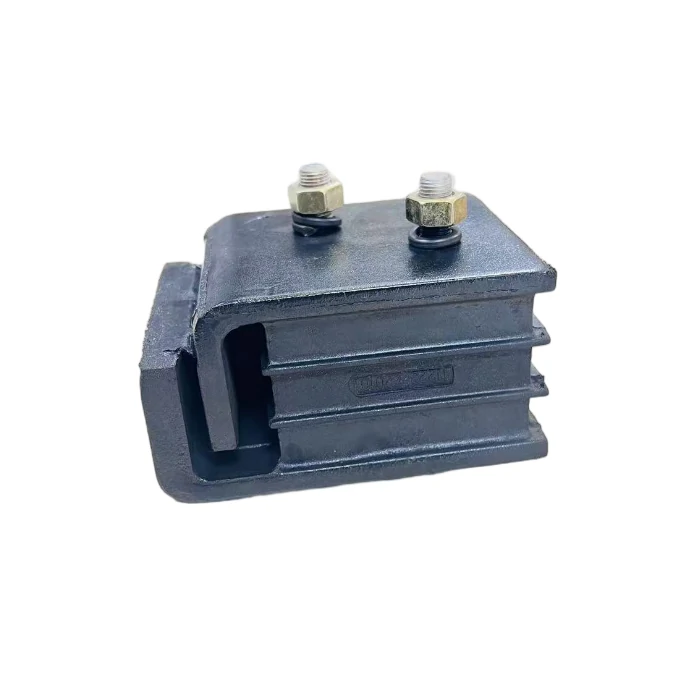
O tipo mais tradicional e comum é o suporte de borracha sólido. Esta conceção consiste em dois pontos de fixação de metal - um para o motor e outro para a estrutura - separados por um bloco de borracha moldada. A forma e a densidade específicas da borracha são projectadas para corresponder às caraterísticas de vibração de um determinado motor. São relativamente simples, baratos de fabricar e bastante duráveis, o que os torna a norma para muitos veículos económicos e camiões mais antigos. A sua limitação reside na sua natureza estática; a rigidez da borracha é um compromisso, concebido para funcionar adequadamente numa gama de regimes do motor, mas não perfeitamente em qualquer um deles.
Suportes hidráulicos (Hydro-Mounts)
À medida que os fabricantes procuravam criar uma experiência de condução mais refinada, foi desenvolvido o suporte hidráulico. Este tipo é semelhante a um suporte de borracha do lado de fora, mas contém uma câmara oca cheia de um fluido à base de glicol. No interior desta câmara, um diafragma de borracha e uma série de canais e válvulas criam um sistema de amortecimento de duas fases. Ao ralenti, quando as vibrações do motor são de baixa frequência, o fluido move-se facilmente através de um grande canal, permitindo que o suporte seja macio e absorva a quantidade máxima de vibração. À medida que a velocidade do motor aumenta, a frequência das vibrações muda, fazendo com que o fluido seja forçado a passar por canais mais pequenos e mais restritivos. Isto "endurece" efetivamente o suporte, proporcionando um melhor controlo sobre o movimento do motor' durante a aceleração e as curvas. Os suportes hidráulicos oferecem um nível superior de amortecimento de vibrações em comparação com os suportes de borracha sólida, mas a sua complexidade torna-os mais caros e introduz um novo ponto de falha: fugas de fluido.
Suportes activos ou electrónicos
No extremo superior do espetro estão os apoios de motor activos, ou controlados eletronicamente. Estes representam o auge da tecnologia de controlo de vibrações. Para além de uma câmara de fluido hidráulico, estes apoios incorporam um solenoide ou um atuador eletromagnético que é controlado pela Unidade de Controlo do Motor (ECU) do veículo. A ECU recebe dados de sensores que monitorizam a velocidade do motor, a posição do acelerador e até a superfície da estrada. Em seguida, envia um sinal para o suporte, que pode alterar instantaneamente a sua rigidez para contrariar na perfeição as vibrações específicas que estão a ser produzidas nesse momento exato. Alguns sistemas avançados, conhecidos como suportes de cancelamento de ruído ativo, podem até gerar as suas próprias contra-vibrações para cancelar o ruído do motor, criando um ambiente de habitáculo excecionalmente silencioso e suave. Estes sistemas oferecem um desempenho sem paralelo, mas são, por uma margem significativa, os mais dispendiosos de produzir e substituir. Encontram-se normalmente em veículos de luxo e em alguns camiões de alto desempenho. Encontrar o sistema certo soluções de montagem de motores de alta qualidade é essencial para manter este nível de desempenho.
Porque é que os apoios de motor falham: Uma investigação sobre desgaste, fadiga e stress ambiental
Como qualquer componente sujeito a stress constante, os apoios de motor têm uma vida útil finita. A sua falha não é uma questão de "se", mas de "quando". O processo de degradação é gradual, impulsionado por uma combinação de forças mecânicas, factores ambientais e, por vezes, erro humano.
A causa mais comum de falha é a fadiga simples. O elemento de borracha ou elastómero está constantemente a ser esticado, comprimido e torcido. Ao longo de dezenas de milhares de ciclos, este trabalho constante faz com que o material perca a sua elasticidade e resistência. Começam a formar-se pequenas fissuras, que crescem gradualmente até a borracha se separar dos componentes metálicos ou se rasgar completamente. No caso dos apoios hidráulicos, esta flexão constante pode também comprometer as vedações da câmara de fluido, provocando fugas. Quando o fluido desaparece, a função de amortecimento hidráulico perde-se e o suporte comporta-se como um simples bloco de borracha, muitas vezes ineficaz.
Os factores ambientais aceleram este processo de envelhecimento. A exposição ao calor do bloco do motor e do coletor de escape pode fazer com que a borracha se torne dura e quebradiça, tornando-a mais suscetível a fissuras. Por outro lado, o frio extremo pode reduzir a sua flexibilidade. O óleo do motor e outros fluidos automóveis são particularmente destrutivos para a maioria dos compostos de borracha. Uma pequena fuga de óleo de uma junta da tampa das válvulas que pingue num suporte do motor pode encurtar drasticamente a sua vida útil ao decompor quimicamente a borracha. O sal da estrada e a sujidade podem corroer as partes metálicas do suporte, enfraquecendo a sua estrutura.
Finalmente, o estilo de condução e os problemas mecânicos relacionados desempenham um papel significativo. A condução agressiva com aceleração forte e mudanças de velocidade bruscas coloca cargas de binário imensas nos apoios. Da mesma forma, um motor que esteja a falhar ou a funcionar mal cria vibrações mais graves do que um motor a funcionar bem, forçando os apoios a trabalhar mais. Uma colisão, mesmo que ligeira, pode causar uma carga de choque súbita que pode rasgar ou partir um suporte instantaneamente. Uma compreensão abrangente destes modos de falha não é meramente académica; informa o nosso processo de diagnóstico e reforça a importância da substituição atempada.
Diagnosticar a falha: Reconhecer os sintomas de um suporte de motor gasto
A deterioração de um suporte do motor raramente é um acontecimento súbito e catastrófico. Mais frequentemente, trata-se de um declínio gradual do desempenho, que se manifesta como uma série de sinais subtis que podem facilmente passar despercebidos ou ser atribuídos erradamente a outros problemas. Aprender a interpretar estes sinais é o primeiro passo para um diagnóstico correto e é essencial para qualquer proprietário de veículo responsável, especialmente os que operam camiões comerciais onde a fiabilidade é fundamental. O veículo comunica o seu problema através de sinais auditivos, tácteis e visuais.
As pistas auditivas: Clunks, Bangs e Rumbles
Um dos indicadores mais comuns de um suporte do motor avariado é a presença de ruídos invulgares provenientes do compartimento do motor. Estes sons são normalmente causados pelo movimento excessivo do motor ou da transmissão e pelo contacto com outros componentes.
Um "clunk" ou "thud" distinto quando se muda a transmissão de park para drive ou reverse é um sintoma clássico. Este é o som de todo o grupo motopropulsor a mudar abruptamente porque um suporte partido já não o está a manter firmemente no lugar. Também pode ouvir um ruído semelhante durante uma aceleração ou desaceleração brusca, uma vez que o binário do motor faz com que este balance para a frente e para trás. Num veículo com tração dianteira, isto pode por vezes ser confundido com um problema de suspensão, mas o segredo é que o ruído está diretamente relacionado com uma alteração na carga do motor.
Um ruído mais persistente de "estrondo" ou "chocalhar", especialmente ao ralenti ou durante a condução a baixa velocidade, também pode indicar um suporte gasto. Quando a borracha se torna dura e quebradiça ou o fluido num suporte hidráulico tem fugas, este já não consegue absorver eficazmente as vibrações do motor'. Em vez disso, transmite-as diretamente para a estrutura do veículo, fazendo com que outros componentes no compartimento do motor ou mesmo no interior da cabina ressoem e criem ruído. Isto é frequentemente mais pronunciado quando o compressor do ar condicionado entra em funcionamento, uma vez que adiciona uma carga extra ao motor, alterando ligeiramente a sua frequência de vibração.
A prova tátil: Vibrações excessivas no habitáculo e no volante
Para além do que se ouve, um suporte do motor avariado dá a conhecer a sua presença através do que se sente. O principal objetivo do suporte é isolar o habitáculo das vibrações do motor, pelo que, quando falha, essa barreira é quebrada.
O sintoma tátil mais revelador é um aumento percetível da vibração sentida no volante, no chão e nos bancos. Esta vibração é muitas vezes mais evidente quando o veículo está parado em marcha, como num semáforo. Neste estado, o motor está sob uma ligeira carga e a produzir vibrações que um suporte saudável absorveria. Com um suporte avariado, estas vibrações percorrem o chassis e entram no habitáculo, criando uma sensação áspera e perturbadora. A vibração pode suavizar-se à medida que se acelera e a frequência de rotação do motor' muda, voltando apenas a uma velocidade diferente.
Pense nisso como uma máquina de lavar roupa desequilibrada. Durante certas partes do seu ciclo de centrifugação, pode funcionar relativamente bem, mas a uma velocidade específica, começa a abanar violentamente. Um carro com um mau suporte do motor comporta-se de forma semelhante. Pode acontecer que o carro se sinta perfeitamente bem a velocidades de autoestrada, mas trema visivelmente a 40 quilómetros por hora. Esta inconsistência é um forte indicador de que as vibrações do motor' não estão a ser geridas corretamente.
A inspeção visual: Fissuras, fugas e movimento do motor
Para o proprietário mais inclinado para a mecânica, uma inspeção visual pode muitas vezes fornecer a prova definitiva de um suporte do motor avariado. Para tal, é necessário abrir o capot e saber o que procurar. Enquanto o veículo estiver estacionado em segurança e com o motor desligado, utilize uma lanterna forte para examinar os apoios. Na maioria dos veículos, existem três ou quatro suportes: um ou dois que seguram o motor, um que segura a transmissão (frequentemente designado por suporte da transmissão, mas que serve o mesmo objetivo) e, por vezes, um suporte de binário ou "osso de cão" que controla especificamente o movimento de oscilação do motor.
Procure fissuras profundas, fendas ou áreas onde a borracha se tenha separado completamente dos suportes metálicos. Para os apoios hidráulicos, procure sinais de fuga de fluido escuro e oleoso do corpo do apoio'. Uma camada de sujidade húmida sobre ou por baixo do suporte é um sinal revelador de uma fuga.
Um teste visual dinâmico é ainda mais conclusivo. Para tal, é necessário um assistente. Com o travão de estacionamento do veículo firmemente acionado e os travões normais aplicados, peça ao seu assistente para ligar o motor. Coloque-se em segurança ao lado do veículo (nunca à sua frente) e peça ao assistente para passar a transmissão de ponto morto para a condução e depois para a marcha-atrás, mantendo o pé no travão. Observar o bloco do motor para detetar movimentos. Um pequeno movimento (talvez um ou dois centímetros) é normal. No entanto, se vir o motor a oscilar, a levantar ou a torcer drasticamente - vários centímetros ou mais - é um sinal claro de que pelo menos um suporte falhou e já não está a conter o grupo motopropulsor. Este teste revela diretamente a perda da função de fixação primária do suporte'.
A análise dos custos principais: Desconstruindo o preço da substituição do suporte do motor
Tendo estabelecido o papel crítico dos coxins do motor e os métodos para diagnosticar a sua falha, podemos agora abordar a questão central deste inquérito: quanto custa substituir os coxins do motor? A resposta não é um número único, mas um intervalo, uma função de diversas variáveis interligadas. É necessário um exame cuidadoso destes factores para desenvolver uma expetativa financeira realista. O custo total pode ser dividido em dois componentes principais: o preço das peças e o custo da mão de obra necessária para as instalar. Estes são depois influenciados pelo tipo de veículo e pela abordagem de reparação escolhida.
Fator 1: O custo das peças - Um espetro de qualidade e tecnologia
O próprio suporte do motor é a primeira parte da equação de custos. Como já explorámos, os apoios não são um componente de tamanho único. O seu preço está diretamente relacionado com o design, o material e o veículo a que se destinam.
| Tipo de montagem | Gama de custos típica (por montagem) | Aplicações comuns em veículos | Caraterísticas principais |
|---|---|---|---|
| Borracha maciça | $30 – $150 | Automóveis económicos, camiões ligeiros mais antigos | Controlo de vibrações simples, duradouro, acessível e básico. |
| Hidráulico | $75 – $350 | Sedans modernos, SUVs, camiões ligeiros | Enchimento de fluido para um amortecimento superior, mais complexo. |
| Ativo/Eletrónico | $250 – $800+ | Veículos de luxo, camiões de alto desempenho | Controlado por ECU para uma rigidez adaptável, suavidade excecional e custo mais elevado. |
| Poliuretano | $50 – $200 | Desempenho/Camiões todo-o-terreno/Camiões pesados | Muito rígida, melhora a resposta do acelerador, aumenta significativamente a vibração. |
Nota: Estes preços são estimativas para 2025 e podem variar muito consoante o fabricante e o fornecedor.
Para um camião ligeiro ou automóvel de passageiros padrão, é provável que encontre suportes hidráulicos. Um conjunto completo de três ou quatro suportes hidráulicos do mercado de substituição pode custar entre $200 e $600. Optar por peças do Fabricante de Equipamento Original (OEM) de um concessionário será normalmente mais caro, podendo variar entre $400 e $1.000 para o mesmo conjunto.
Para camiões comerciais pesados, a escala e o custo aumentam significativamente. Os suportes são maiores, construídos para suportar forças imensas e podem incorporar designs mais robustos. Um único suporte para um camião comercial pode facilmente custar entre $150 e $500, dependendo da marca e do modelo do camião'. Por conseguinte, um conjunto completo pode custar entre $600 e mais de $2.000 só para peças. A escolha entre OEM e pós-venda também é fundamental aqui. Embora as peças de pós-venda de uma empresa de renome fabricante de peças para camiões possam oferecer poupanças significativas, é vital garantir que cumprem ou excedem as especificações de durabilidade e capacidade de carga exigidas para a operação comercial (Driver and Vehicle Standards Agency, 2025).
Fator 2: Custos de mão de obra - A intersecção de tempo, competências e geografia
A mão de obra é frequentemente o maior componente da fatura total da reparação. O custo é determinado por duas coisas: o tempo necessário para efetuar o trabalho e a taxa horária da oficina.
Tempo de trabalho: Os mecânicos utilizam guias padronizados que estimam o tempo necessário para reparações específicas. A substituição dos apoios do motor pode ser uma tarefa simples ou muito complexa, dependendo do design do veículo'. Nalguns veículos, os apoios são facilmente acessíveis a partir da parte superior ou inferior do compartimento do motor. Noutros, estão enterrados atrás de outros componentes, como o alternador, o compressor de ar condicionado ou até mesmo partes da subestrutura, que têm de ser removidas para obter acesso.
- Substituição fácil: Para um veículo com suportes acessíveis (por exemplo, alguns camiões mais antigos com tração traseira), um mecânico pode indicar 1,5 a 2,5 horas de trabalho para substituir todos os suportes.
- Substituição difícil: Para um veículo moderno, compacto ou com tração integral, em que o compartimento do motor está muito apertado, o trabalho pode demorar 4 a 6 horas, ou mesmo mais em casos extremos. O motor pode ter de ser levantado, inclinado ou suportado por um suporte especial, o que aumenta a complexidade e o tempo.
Taxa horária: A taxa de trabalho por hora da oficina' varia drasticamente.
- Lojas independentes: Um mecânico local independente pode cobrar entre $80 e $150 por hora.
- Concessionários: Um concessionário certificado pelo fabricante tem normalmente despesas gerais mais elevadas e cobra mais, frequentemente entre $150 e $250 por hora.
- Localização geográfica: As taxas nas grandes áreas metropolitanas são quase sempre mais elevadas do que nas cidades rurais.
Combinando estes factores, o custo da mão de obra para um automóvel de passageiros ou camião ligeiro típico pode variar entre um mínimo de cerca de $120 (1,5 horas a $80/h) e um máximo de mais de $1.500 (6 horas a $250/h). O intervalo mais comum para um veículo padrão é entre $300 e $700 em mão de obra.
Fator 3: A influência do tipo de veículo - dos automóveis de passageiros aos camiões pesados
O tipo de veículo é o principal fator dos custos de peças e de mão de obra.
- Carros compactos: Estes têm frequentemente compartimentos de motor muito apertados, o que pode aumentar o tempo de mão de obra, mesmo que as peças sejam relativamente baratas. O custo total pode situar-se entre $400 e $900.
- Sedans e SUVs: Esta é a categoria mais comum. Com uma mistura de suportes hidráulicos e de borracha, e tempos de mão de obra moderados, o custo total situa-se normalmente entre $500 e $1.200.
- Camiões ligeiros (por exemplo, Ford Ranger, Toyota Hilux): Estes são frequentemente mais fáceis de trabalhar do que os automóveis, devido ao maior espaço no compartimento do motor. No entanto, as peças podem ser ligeiramente mais robustas. Os custos situam-se entre os $600 e os $1.500.
- Camiões pesados (por exemplo, Ford F-350, Ram 3500): Motores maiores e componentes mais robustos significam custos de peças mais elevados e potencialmente mais mão de obra. O custo total pode facilmente ser de $1.000 a $2.500.
- Comercial/Semi-autocarros: Esta é uma categoria completamente diferente. Os apoios são enormes, a mão de obra é especializada e o trabalho requer equipamento de elevação pesado. O custo para substituir os suportes num camião semirreboque pode variar entre $2.000 e $5.000 ou mais, dependendo do modelo e da extensão do trabalho.
Fator 4: O Dilema da Bricolage vs. Serviço Profissional - Uma Análise Custo-Benefício
Para o mecânico doméstico experiente, a substituição dos apoios de motor pode ser uma forma tentadora de poupar dinheiro. Ao efetuar o trabalho você mesmo, pode eliminar a maior parte da despesa, pagando apenas pelas peças. No entanto, este caminho tem os seus perigos e custos ocultos.
O potencial de poupança: Se a mão de obra para um trabalho for cotada em $600, fazê-lo você mesmo representa uma poupança direta desse montante. Esta é a principal motivação para a maioria das tentativas de bricolage.
Os riscos e os custos ocultos:
- Ferramentas: Este não é um trabalho que possa ser efectuado com um conjunto de soquetes básico. Irá necessitar de um macaco de chão de alta qualidade, vários suportes de macaco robustos, uma chave dinamométrica e, provavelmente, uma barra de suporte do motor (ou guindaste do motor) para segurar o motor em segurança enquanto os apoios são removidos. O custo destas ferramentas pode rapidamente consumir as suas poupanças se ainda não as tiver.
- Segurança: Esta é a consideração mais importante. O motor é extremamente pesado. Se não for corretamente apoiado, pode deslocar-se ou cair, causando danos catastróficos no veículo e, mais importante ainda, ferimentos graves ou a morte da pessoa que trabalha debaixo dele. Não há margem para erros.
- Complexity and Time: What a professional mechanic can do in three hours might take a DIYer an entire weekend. Unexpected complications, like a rusted bolt that snaps off, can turn a straightforward job into a nightmare.
- Risk of Damage: Incorrectly supporting the engine can damage other components like the radiator, oil pan, or transmission housing. Failing to torque the new mount bolts to the manufacturer's specification can lead to premature failure of the new part or damage to the engine block or subframe threads.
For most people, especially those with modern or complex vehicles, the professional route is the wiser choice. While the initial query is "how much does it cost to change engine mounts," a more nuanced question is what is the value of safety, correctness, and peace of mind. For a critical component like this, the warranty on parts and labor provided by a professional shop offers significant value.
Uma perspetiva global: quanto custa mudar os apoios de motor em todo o mundo?
The cost of automotive repair is not uniform across the globe. It is subject to local economic conditions, import tariffs on parts, labor market rates, and the specific vehicle fleets common to each region. For a business or individual operating vehicles in diverse markets like Europe, Southeast Asia, or Africa, understanding these regional variations is essential for accurate budgeting and maintenance planning. The following table provides a high-level estimate of the total replacement cost for a common light-duty truck (like a Toyota Hilux or Ford Ranger) in various regions for 2025.
| Region | Parts Cost (Est. USD) | Labor Cost (Est. USD) | Total Estimated Cost (USD) | Key Influencing Factors |
|---|---|---|---|---|
| Western Europe (e.g., Germany, UK) | $250 – $600 | $300 – $800 | $550 – $1,400 | High labor rates, strong currency, OEM parts preference, stringent vehicle safety standards (TÜV, MOT). |
| Southeast Asia (e.g., Thailand, Malaysia) | $150 – $400 | $100 – $300 | $250 – $700 | Lower labor rates, strong aftermarket parts availability (especially for Japanese brands), import duties can vary. |
| Middle East (e.g., UAE, Saudi Arabia) | $200 – $550 | $150 – $400 | $350 – $950 | Mix of official dealerships and large independent workshops, preference for durability in high heat, labor costs vary. |
| South America (e.g., Brazil, Colombia) | $180 – $500 | $120 – $350 | $300 – $850 | High import taxes on parts can inflate costs, labor rates are generally lower, vehicle fleet is diverse. |
| Oceania (e.g., Australia, New Zealand) | $250 – $650 | $250 – $700 | $500 – $1,350 | High labor costs similar to Europe, strong demand for robust parts for "ute" culture, currency fluctuations. |
| Africa (e.g., South Africa, Nigeria) | $150 – $450 | $80 – $250 | $230 – $700 | Wide cost variation, reliance on aftermarket and used parts, skilled labor can be inexpensive but quality varies. |
Disclaimer: These figures are broad estimations for 2025 and can be significantly influenced by vehicle make/model, choice of OEM vs. aftermarket parts, and the specific repair shop.
Cost Benchmarks in Europe and Oceania
In regions like Western Europe and Australia/New Zealand, the cost structure for automotive repair is characterized by high labor rates and a strong emphasis on regulatory compliance and safety. In Germany, for example, repairs are often performed to meet strict TÜV standards, which encourages the use of high-quality, often OEM, parts. A dealership in Sydney or London might charge an hourly rate equivalent to $150-$200 USD. Consequently, even a relatively simple engine mount replacement on a light truck can approach or exceed $1,000 USD. The higher cost reflects a mature market with high wages, rigorous training standards for technicians, and a consumer base that often prioritizes manufacturer-approved repairs.
Cost Considerations in Southeast Asia and Africa
Conversely, in many parts of Southeast Asia and Africa, the financial landscape is quite different. Labor is a much smaller component of the total cost. A skilled mechanic in Bangkok or Lagos might charge a fraction of their European counterpart. This makes the cost of parts the dominant factor in the final bill. The market for aftermarket components, particularly for popular Japanese and Korean truck models, is vast and competitive. This provides consumers with a wide range of pricing options. However, the quality of these parts can vary immensely. While it might be possible to get engine mounts replaced for as little as $250 USD, ensuring the longevity and reliability of the repair depends heavily on sourcing quality components from a trusted supplier of undercarriage and peças para camiões. The challenge in these regions is often not the cost itself, but navigating the market to find a balance between affordability and quality.
Pricing Dynamics in the Middle East and South America
The Middle East and South America present a hybrid scenario. Major cities like Dubai or São Paulo have world-class dealerships with prices and standards comparable to those in Europe. At the same time, they have a thriving ecosystem of independent workshops where costs are more moderate. A significant factor in South America is the presence of high import tariffs and taxes on automotive parts, which can make even aftermarket components surprisingly expensive. In the Middle East, the extreme heat places immense stress on rubber and hydraulic components, leading to a market preference for parts known for their durability and heat resistance, which can command a premium price. Therefore, while labor may be more affordable than in the West, parts costs can keep the total repair bill in a moderate to high range.
O processo de substituição: Um guia concetual passo a passo
To truly comprehend the labor costs involved in an engine mount replacement, it is helpful to visualize the procedure a technician must perform. It is a process that demands precision, the right equipment, and a methodical approach to ensure both effectiveness and safety. While the specific steps will vary between a rear-wheel-drive truck and an all-wheel-drive SUV, the core principles remain the same.
Preparing for the Procedure: Safety and Tools
The process begins not with a wrench, but with preparation. The vehicle must be parked on a level surface, the parking brake engaged, and the wheels chocked. The technician will first disconnect the battery to prevent any accidental electrical shorts or engine starts. They then perform a survey of the engine bay, identifying the location of the mounts and any components that may obstruct access. This is where experience is invaluable; a seasoned mechanic will anticipate which hoses need to be disconnected, which brackets need to be moved, and the most efficient sequence of operations. The required tools are gathered: a range of sockets and wrenches, pry bars, and most importantly, the equipment to support the engine.
Supporting the Engine: The Critical First Step
This is the most crucial phase of the entire operation. The engine and transmission assembly can weigh several hundred kilograms. Before the old mounts, which are the very things holding this weight, can be unbolted, the powertrain must be securely supported by an external means. There are two common methods for this.
The preferred method for many jobs is an engine support bar. This is a heavy steel beam that spans across the engine bay, resting on the strut towers or fenders. Chains are dropped down from the bar and attached to sturdy lifting points on the engine block. By turning threaded hooks on the bar, the technician can gently lift the engine just enough to take the weight off the mounts.
The alternative method is to support the engine from below using a floor jack. This requires extreme care. A block of wood must be placed between the jack and the engine's oil pan to distribute the load and prevent the jack from cracking the thin metal of the pan. The technician will raise the jack until it just makes contact and takes the strain. This method is often used when replacing transmission mounts or when under-vehicle access is better.
Removing the Old and Installing the New
With the engine securely supported, the unbolting can begin. The technician will typically tackle one mount at a time. This involves removing the "through-bolt" that passes through the center of the mount and the bolts or nuts that secure the mount's bracket to the engine block and the vehicle's frame. In a corroded environment, these fasteners can be seized, requiring penetrating oil, heat, or an impact wrench to remove.
Once the old mount is free, the area on the frame and engine block is cleaned of any dirt or corrosion to ensure the new mount sits perfectly flat. The new mount is then maneuvered into position. This can be a challenging step, as tolerances are tight. The technician may need to carefully raise, lower, or tilt the supported engine by a few millimeters to align the bolt holes perfectly. Forcing bolts into misaligned holes is a cardinal sin, as it can strip the threads in the engine block or frame, a disastrous and costly mistake.
Once the new mount is in place, the bolts are threaded in by hand to prevent cross-threading, then tightened to the manufacturer's specified torque setting using a torque wrench. This is a non-negotiable step. Under-tightening can allow the mount to work itself loose, while over-tightening can stretch the bolts or crack the mount's housing. The process is then repeated for the remaining mounts.
Final Checks and Torquing to Spec
After all mounts have been replaced, the engine support is carefully removed. The engine now rests on its new mounts. The technician will then reconnect the battery and any other components that were disconnected. A final check is performed to ensure all tools are removed from the engine bay. The engine is started, and the technician observes it for smooth operation, listening for any unusual noises and feeling for vibrations. A short test drive is often the final step to confirm that the repair has been successful and the original symptoms have been resolved. The process, while conceptually simple, is laden with critical details where a lack of knowledge or care can lead to significant problems. This is the skill and diligence that the labor charge represents.
Para além da substituição: Manutenção proactiva e cuidados a longo prazo
Addressing a failed engine mount is a reactive repair, but a truly comprehensive approach to vehicle ownership involves proactive measures to maximize the life of all components. While engine mounts are wear items destined for eventual replacement, certain practices can extend their service interval and prevent the collateral damage that a complete failure can cause.
The Role of Driving Habits in Engine Mount Longevity
The way a vehicle is driven has a direct impact on the stress experienced by its engine mounts. An operator who practices smooth acceleration and gentle braking puts far less strain on the powertrain than one who drives aggressively. Every time the throttle is applied suddenly, the engine's torque attempts to twist it within the engine bay, and the mounts must resist this force. Similarly, abrupt downshifts or "dumping the clutch" in a manual transmission vehicle sends a shockwave through the drivetrain that the mounts must absorb.
For operators of commercial trucks, especially in urban delivery or construction environments with constant stop-and-go traffic, this is particularly relevant. Training drivers to operate their vehicles smoothly is not just a matter of fuel economy and brake wear; it is a direct investment in the longevity of components like engine mounts, clutches, and universal joints. Avoiding the temptation to overload the vehicle also reduces the overall strain on the entire chassis, including the points where the engine is mounted.
Choosing the Right Part: OEM vs. Aftermarket Engine Mounts
When replacement becomes necessary, the choice between OEM (Original Equipment Manufacturer) and aftermarket parts is a significant one. This decision affects not only the immediate cost but also the potential for future performance and durability.
OEM Parts: These are the same components that the vehicle was fitted with at the factory. They are guaranteed to fit perfectly and to have the exact same performance characteristics (stiffness, damping) that the vehicle's engineers originally intended. The primary drawback is cost; OEM parts sold through dealerships are almost always the most expensive option. For a vehicle under warranty, using OEM parts is often mandatory to maintain coverage.
Aftermarket Parts: The aftermarket offers a vast array of options from numerous manufacturers. The quality can range from excellent to dangerously poor.
- Pós-venda de alta qualidade: Reputable aftermarket brands often produce parts that meet or even exceed OEM specifications. They may use advanced materials or improved designs based on observed failure patterns of the original parts. These components can offer OEM-level performance at a significantly lower price, representing excellent value.
- Pós-venda de baixa qualidade: At the other end of the spectrum are cheap, poorly made parts. These may use inferior rubber that will degrade quickly, have sloppy manufacturing tolerances leading to poor fitment, or fail to replicate the complex damping characteristics of a hydraulic mount. Installing such a part is a false economy, as it will likely fail prematurely, requiring the job to be done all over again, and may not even solve the original vibration issue.
The prudent approach, especially for a critical component, is to either stick with OEM parts or to purchase high-quality aftermarket parts from a trusted and knowledgeable supplier. Asking about the brand, the warranty, and the material composition is essential. For demanding applications like commercial trucking or off-roading, some owners opt for polyurethane mounts. These are much stiffer than rubber and offer superior durability and engine control. However, they transmit far more vibration into the cabin, sacrificing comfort for performance. They are a specialized choice and not suitable for a daily-driven vehicle where a smooth ride is desired.
Integrating Mount Inspection into Regular Vehicle Maintenance Schedules
The best way to avoid the sudden, inconvenient failure of an engine mount is to make its inspection a routine part of vehicle maintenance. This aligns with the best practices outlined by organizations like the UK's Driver and Vehicle Standards Agency, which emphasize regular, systematic checks to ensure roadworthiness (Driver and Vehicle Standards Agency, 2025).
During every oil change or service interval, the mounts should be visually inspected. A technician should look for the tell-tale signs of aging: cracking, tearing, and fluid leaks. This takes only a few moments but can catch a problem in its early stages. If a mount is showing signs of advanced wear, it can be replaced proactively at a scheduled service appointment, rather than as an emergency repair after it has completely failed.
Catching a failing mount early does more than just prevent a rough ride. A completely broken mount can allow the engine to move excessively, which can put stress on and damage other, more expensive components. Radiator hoses can be pulled apart, exhaust pipes can crack, wiring harnesses can be stretched, and CV axles can be pulled from the transmission. The cost to repair this collateral damage can far exceed the initial cost of replacing the mount itself. Therefore, viewing engine mount inspection as a form of preventative maintenance is a financially sound strategy for long-term vehicle ownership.
Perguntas frequentes (FAQ)
Can I drive with a broken engine mount?
While it may be physically possible to drive a vehicle with a broken engine mount, it is strongly discouraged for safety and mechanical reasons. A failed mount can allow for excessive engine movement, which can damage other components such as radiator hoses, wiring, and exhaust systems. In severe cases, it can affect throttle linkage or cause the CV axles to dislodge. The vehicle's handling can also be compromised. It is best to have it repaired as soon as possible.
How long do engine mounts typically last?
The lifespan of an engine mount varies greatly depending on the vehicle, driving conditions, and mount quality, but a general expectation is between 80,000 and 150,000 kilometers (approximately 50,000 to 100,000 miles). Mounts on heavy-duty trucks or vehicles used in harsh environments (extreme heat, rough roads) may have a shorter lifespan. Regular inspection is more important than relying on a specific replacement interval.
Will replacing engine mounts improve performance?
Replacing worn or broken engine mounts will restore the vehicle's original performance characteristics. It will not add horsepower, but it can make the vehicle feel more responsive. By properly securing the engine, the transfer of torque to the wheels becomes more direct and efficient, especially during acceleration. More importantly, it will dramatically improve ride quality by eliminating excess vibration and noise, restoring the comfort the vehicle was designed to have.
É necessário substituir todos os apoios de motor ao mesmo tempo?
While not strictly necessary, it is highly recommended. Engine mounts wear out at a similar rate. If one has failed, the others are likely near the end of their service life. Furthermore, a new, stiff mount paired with old, soft ones will create an imbalance in the system, putting extra stress on both the new and the old components. Replacing them all at once is more cost-effective in the long run, as it consolidates the labor into a single job.
Qual é a diferença entre um suporte do motor e um suporte da transmissão?
Functionally, there is very little difference. A transmission mount serves the same purpose as an engine mount: it secures the transmission (which is part of the powertrain) to the vehicle's frame while absorbing vibrations. They are often discussed together as a system. The key distinction is simply their location—engine mounts attach to the engine block, while transmission mounts attach to the transmission housing. They are all part of the same team working to keep your powertrain stable and your ride smooth.
Conclusão
The inquiry into how much it costs to change engine mounts reveals a complex interplay of factors that extends far beyond a simple price tag. The expense is a reflection of material science, mechanical engineering, labor economics, and global commerce. From the simple rubber block to the sophisticated active hydro-mount, the part itself dictates a wide cost spectrum. This is compounded by the labor required, a variable sensitive to the intricate design of the modern vehicle and the diverse economic landscapes of regions from Europe to Africa.
For the vehicle owner, this knowledge is a tool of empowerment. Understanding the symptoms of a failing mount allows for early diagnosis, preventing the cascade of collateral damage that can follow a complete failure. Recognizing the difference between OEM and aftermarket parts enables a calculated decision on value versus cost. Most importantly, appreciating the skill and safety precautions involved in the replacement process provides a clear perspective on the value of professional service. While a DIY approach offers tempting savings, it carries substantial risks that are often not worth the reward. Ultimately, maintaining the health of a vehicle's engine mounts is not an expense but an investment in safety, comfort, and the mechanical longevity of the entire vehicle.
Referências
Driver and Vehicle Standards Agency. (2025). Guide to maintaining roadworthiness: Commercial goods and public service vehicles. UK Government. https://assets.publishing.service.gov.uk/media/6824a454b9226dd8e81ab890/guide-to-maintaining-roadworthiness-commercial-goods-and-public-service-vehicles.pdf
Gillespie, T. D. (1992). Fundamentos da dinâmica automóvel. Sociedade de Engenheiros Automotivos.
Hillier, V. A. W., & Coombes, P. (2004). Hillier's fundamentals of motor vehicle technology. Nelson Thornes.
Juvinall, R. C., & Marshek, K. M. (2011). Fundamentals of machine component design (5th ed.). John Wiley & Sons.
Komatsu. (2025). Parts. Komatsu Ltd.
Seto, K. (1999). The trend of the research on an active vibration control. Journal of System Design and Dynamics, C42(3), 299-306.
Spobe, M., & Hylleberg, M. (2007). Active engine mounts for passenger cars. Society of Automotive Engineers.
Volvo Trucks. (2025). Parts catalogue. Volvo Group.