.png)
.png)



Expert Guide to the Engine Mount Diagram: 5 Steps for Truck Maintenance in 2025
December 10, 2025
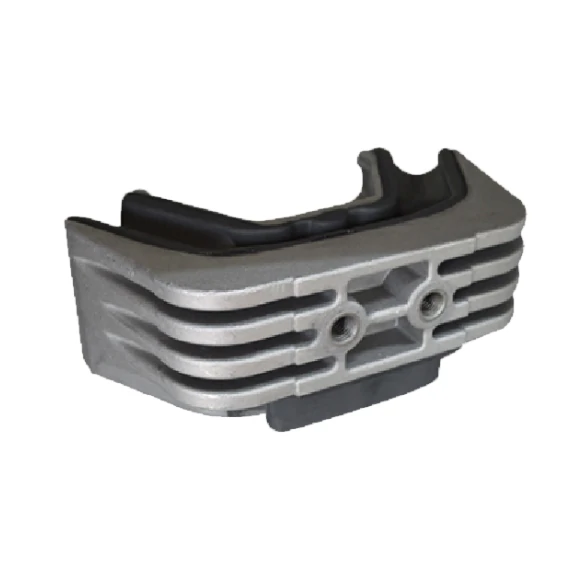
Abstract
An engine mount is a fundamental component that secures a vehicle's engine to its chassis, serving the dual purpose of managing engine torque and isolating vibrations. This analysis explores the critical role of the engine mount diagram in the maintenance and repair of heavy-duty commercial trucks. The diagram functions as an essential schematic, providing technicians and fleet managers with precise information regarding the location, orientation, part numbers, and torque specifications for each mount within the powertrain system. Failure to properly interpret this diagram or address worn mounts can lead to a cascade of mechanical issues, including damage to the transmission, exhaust system, and other peripheral components. This document provides a comprehensive methodology for reading an engine mount diagram, diagnosing symptoms of failure, and executing a systematic replacement. It posits that a thorough understanding of the engine mount diagram is not merely a technical skill but a foundational element of proactive vehicle maintenance, ensuring operational safety, comfort, and mechanical longevity for commercial vehicles operating under strenuous conditions in 2025.
Key Takeaways
- An engine mount diagram provides the exact location and part numbers for all engine mounts.
- Excessive cabin vibration is a primary indicator of a worn or failed engine mount.
- Always support the engine’s weight before attempting to remove any mounting bolts.
- Use a torque wrench to tighten all fasteners to the specifications listed on the diagram.
- Regularly inspect mounts for cracks or fluid leaks to prevent catastrophic failure.
- Consult the engine mount diagram to confirm the orientation of asymmetrical mounts.
- Proactive inspections prevent costly collateral damage to other powertrain components.
Table of Contents
- Understanding the Foundation: What is an Engine Mount?
- Step 1: Deciphering the Blueprint – How to Read an Engine Mount Diagram
- Step 2: Diagnosing the Ailment – Recognizing Symptoms of a Failing Engine Mount
- Step 3: Gathering the Tools and Sourcing the Right Parts
- Step 4: The Surgical Procedure – A Step-by-Step Replacement Guide
- Step 5: Proactive Care – Ensuring the Longevity of Your Engine Mounts
- Frequently Asked Questions (FAQ)
- A Final Thought on Mechanical Harmony
- References
Understanding the Foundation: What is an Engine Mount?
To begin our inquiry into the engine mount diagram, we must first establish a firm understanding of the object it represents. The engine mount is a component whose significance is often inversely proportional to its visibility. Tucked away between the massive engine block and the sturdy frame of a heavy-duty truck, it performs a task of immense importance, mediating the relationship between the vehicle's heart and its skeleton. Without it, the raw, explosive power of a modern diesel engine would be an untamable force, rendering the vehicle not only uncomfortable but dangerously unstable.
The Unsung Hero of the Powertrain: Defining the Engine Mount's Role
At its core, an engine mount serves three primary functions, each vital to the proper operation of the vehicle. First, it physically secures the engine and transmission assembly to the vehicle's frame or subframe. This is its most obvious role. The engine, a component of considerable mass, must be held firmly in place as the truck navigates diverse terrains and accelerates through its gears.
Second, the mount must absorb and dampen the vibrations produced by the engine. An internal combustion engine is, by its very nature, a source of constant vibration. The controlled explosions within its cylinders create a rhythmic, and often intense, oscillation. The engine mount acts as a sophisticated cushion, isolating these vibrations from the chassis and, by extension, from the cabin and its occupants. This function is not merely about comfort; it is about preserving the integrity of countless other components, from sensitive electronics to the welds holding the vehicle together, that could be damaged by perpetual shaking.
Third, and perhaps most dynamically, the engine mount manages the rotational force, or torque, of the engine. When you accelerate, the engine attempts to twist in the opposite direction of the crankshaft's rotation. The engine mounts must resist this twisting motion, a force known as torque reaction. In a high-torque diesel engine of a commercial truck, this force is substantial. The mounts prevent the engine from lurching and moving excessively, ensuring that its power is smoothly transferred to the drivetrain rather than being wasted in uncontrolled movement.
A Philosophical Interlude: The Mount as a Mediator
If we were to think about the truck as a complex system, much like a living organism, the engine mount plays a role analogous to cartilage in a joint. It is a material that is both strong and pliable, capable of holding powerful elements together while simultaneously allowing for controlled movement and absorbing shock. It is a mediator, negotiating the relationship between two entities with conflicting natures: the violent, dynamic engine and the rigid, static frame.
This act of mediation is a delicate balance. A mount that is too stiff will transfer too much vibration, leading to a harsh ride and potential damage to other parts. A mount that is too soft will allow excessive engine movement, resulting in poor handling, sloppy throttle response, and strain on driveline components like the driveshaft and axles. Therefore, the design and material composition of an engine mount represent a carefully engineered compromise, a pursuit of harmony within a system of powerful opposing forces. Understanding this philosophical role helps us appreciate why a simple-looking block of rubber and metal is, in fact, a highly sophisticated and indispensable piece of engineering.
The Materials Science Perspective: From Solid Rubber to Hydraulic Sophistication
The evolution of the engine mount is a fascinating journey through materials science. The earliest mounts were little more than simple blocks of solid rubber bolted between the engine and the frame.
-
Solid Rubber Mounts: Natural or synthetic rubber is the traditional material of choice. Its elastomeric properties—the ability to deform under stress and return to its original shape—make it an excellent material for vibration absorption. The specific durometer, or hardness, of the rubber is carefully selected by engineers to balance damping characteristics with durability. While effective and inexpensive, solid rubber mounts can harden and crack over time due to exposure to heat, oil, and ozone.
-
Polyurethane Mounts: As an alternative, polyurethane (often called 'poly') offers a stiffer option. Polyurethane is more resistant to degradation from oils and chemicals and generally has a longer lifespan than rubber. However, its increased stiffness means it transfers more vibration (a higher level of Noise, Vibration, and Harshness, or NVH) into the cabin. For this reason, polyurethane mounts are more common in high-performance applications where a direct feel and minimal engine movement are prioritized over comfort. For a heavy-duty truck, where a driver may spend thousands of hours a year, the increased vibration from polyurethane can lead to significant fatigue.
-
Hydraulic Mounts (Hydro-Mounts): Modern heavy-duty trucks predominantly use hydraulic mounts. These are far more complex than their solid counterparts. A hydraulic mount consists of a rubber body encapsulating two fluid-filled chambers connected by a small orifice or channel. The hydraulic fluid inside, typically a glycol or oil-based liquid, is forced through the channel as the mount flexes. This action provides a superior level of damping. At low frequencies, such as engine idle, the fluid moves easily, allowing the mount to be soft and absorb fine vibrations. At higher frequencies and larger movements, such as those during acceleration or on rough roads, the resistance of the fluid passing through the orifice provides significant damping, controlling the engine's movement. This variable-rate damping is what makes hydro-mounts so effective at providing both comfort and control (Zhang, 2021).
-
Active or Electronic Mounts: The pinnacle of current mount technology is the active mount. These are a type of hydraulic mount that incorporates electronic control. Sensors monitor engine speed and vibration, and a control unit can actively change the properties of the mount in real-time. This is often achieved through a solenoid that alters the size of the orifice between the fluid chambers or through magneto-rheological fluid, which changes its viscosity when a magnetic field is applied. This allows the mount to be extremely soft at idle for maximum comfort and then instantly stiffen during acceleration for optimal control, providing the best of all worlds. While common in luxury passenger cars, their complexity and cost have limited their widespread use in all but the most premium heavy-duty trucks as of 2025.
Why Heavy-Duty Trucks Demand Robust Mounts
The operational environment of a commercial truck places demands on engine mounts that far exceed those of a typical passenger car. A Class 8 truck's diesel engine can produce over 2,000 lb-ft of torque, a force that must be constantly restrained by the mounts. These vehicles operate for millions of kilometers, often over poorly maintained roads and in extreme weather conditions, from the freezing winters of Northern Europe to the scorching desert heat of the Middle East.
Furthermore, the engine in a commercial truck is a source of low-frequency, high-amplitude vibrations that are particularly difficult to dampen. The health and comfort of the driver, who may live in the truck for weeks at a time, depend on the effectiveness of these mounts. A failed mount in a heavy-duty truck is not an inconvenience; it is a serious safety and operational risk that can lead to costly downtime and extensive collateral damage. This context underscores why a deep understanding of the engine mount and its corresponding diagram is not just for mechanics, but for any responsible owner or operator.
Step 1: Deciphering the Blueprint – How to Read an Engine Mount Diagram
An engine mount diagram is a technical drawing, a schematic that communicates a wealth of information without using many words. For the uninitiated, it can appear as a confusing collection of lines and numbers. However, with a foundational understanding of its language, it transforms into an invaluable map, guiding you through the process of inspection, diagnosis, and replacement. Think of it as a musical score; to a novice, it is meaningless dots, but to a musician, it contains all the notes, timing, and dynamics needed to create a beautiful piece of music. Similarly, the engine mount diagram provides the blueprint for restoring mechanical harmony to your truck's powertrain.
The Language of Schematics: An Introduction to Technical Diagrams
Before we focus on the specifics of an engine mount diagram, it is helpful to grasp the general principles of reading any technical schematic. These diagrams are a form of visual communication designed for precision and clarity. They typically use standardized symbols and a system of leaders and callouts to identify parts and provide instructions. The primary goal is to convey complex spatial and procedural information efficiently.
Most diagrams will feature an "exploded view," where the components are shown slightly separated from each other along a central axis. This allows you to see each individual part, including fasteners and brackets, and understand how they fit together in the correct order. You will also see different line types: solid lines usually represent the visible edges of a component, while dashed lines might indicate parts that are hidden from view or show the path of movement. Understanding these conventions is the first step toward literacy in technical drawings.
Table 1: Common Symbols in an Engine Mount Diagram
To aid in the process of deciphering these schematics, a table of common symbols and their meanings is an indispensable tool. While symbols can vary slightly between manufacturers (e.g., Scania vs. Volvo vs. Kenworth), the fundamental representations are often quite similar.
| Symbol / Representation | Meaning & Purpose |
|---|---|
| Hexagon Shape | Typically represents the head of a bolt or a nut. |
| Circle with a Hexagon | Often indicates a bolt that passes through a component. |
| Concentric Circles | Represents a washer (flat, spring, or lock washer). |
| Leader Line with Number | A line pointing to a component, linked to a numbered parts list or legend. |
| (→) Arrow with "FR" | Indicates the front of the vehicle for orientation. |
| Spiral or Jagged Line | Represents a spring, often part of a tensioning mechanism. |
| [XX N·m] or [YY lb·ft] | Torque Specification. Indicates the required tightness for a fastener. |
| Dashed Outline | Shows the position of a related component that is not part of the main assembly. |
| Shaded/Cross-hatched Area | Represents a cross-section view of a component, showing its internal structure. |
Key Elements of an Engine Mount Diagram
Now, let's apply these principles to a specific engine mount diagram. When you first look at the diagram, you should orient yourself by finding the key identifiers.
-
Title Block: Usually located in a corner, this block contains vital information like the vehicle model, engine type, year of manufacture, and the name of the specific assembly (e.g., "Engine Mounting – Front"). This confirms you are looking at the correct document for your truck.
-
Orientation Markers: Look for an arrow or text indicating the "Front" or "FR" of the vehicle. This is your primary reference point for understanding the layout. All other components are positioned relative to this marker.
-
Component Callouts: Each part on the diagram—the mount itself, brackets, heat shields, bolts, nuts, and washers—will have a number or letter assigned to it via a leader line.
-
Parts Legend or Bill of Materials (BOM): Elsewhere on the page (or on a subsequent page), you will find a list that corresponds to the callout numbers. This legend provides the official part name, the manufacturer's part number, and the quantity required. This is absolutely essential for ordering the correct high-quality replacement engine mounts.
-
Torque Specifications: This is one of the most critical pieces of information on the diagram. Next to the fasteners (bolts and nuts), you will often see a value followed by units like N·m (Newton-meters) or lb·ft (pound-feet). This tells you the precise amount of rotational force to apply when tightening the fastener. Over-tightening can damage the threads or the mount, while under-tightening can allow for dangerous movement.
-
Sub-Assemblies: Sometimes, a complex part like a hydraulic mount will be shown as a single unit on the main diagram but will have a secondary, more detailed diagram showing its internal components. This is useful for understanding its function but less so for a standard replacement, as mounts are typically replaced as a complete unit.
Locating Your Specific Diagram: From Manufacturer Manuals to Digital Databases
Having the right diagram is paramount. Using a diagram for a similar but not identical model can lead to incorrect part orders and improper installation. In 2025, there are several reliable sources for obtaining the correct engine mount diagram for your heavy-duty truck.
-
Official Factory Service Manuals (FSMs): This is the gold standard. Provided by the manufacturer (e.g., Freightliner, MAN, Isuzu), these manuals contain the most accurate and detailed diagrams and procedures. They are often available in digital format through paid subscriptions to the manufacturer's service portal or sometimes in print from authorized dealers.
-
Professional Automotive Repair Databases: Services like ALLDATA, Mitchell 1, and their heavy-duty truck equivalents are comprehensive digital resources used by professional repair shops. They compile data directly from manufacturers and present it in a standardized, searchable format. These are subscription-based but are invaluable for any serious maintenance operation.
-
Reputable Aftermarket Part Suppliers: Quality aftermarket suppliers often provide technical resources, including diagrams, to support the parts they sell. For instance, a detailed catalog of or engine components may include simplified diagrams to aid in identification and installation (AMT Equipment Parts, 2025).
It is wise to be cautious of information found on open forums or non-professional websites, as its accuracy cannot be guaranteed. Always cross-reference with a trusted source if possible.
A Practical Walkthrough: Analyzing a Sample Diagram
Let's imagine we are looking at an engine mount diagram for the right-hand (RH) front mount of a popular European-style cab-over truck.
The diagram shows an exploded view. At the top, we see a large bracket (callout #1) with three holes. A leader line points to three identical bolts (callout #2) and washers (callout #3), indicating these are used to attach the bracket to the engine block itself.
Below this, we see the main hydraulic engine mount (callout #4). It's an irregular shape, signifying that it has a specific orientation. An arrow on the mount itself might be present, which would correspond to a note in the legend like "Arrow must point toward front of vehicle." The mount has a large central bolt hole and two smaller alignment pins.
Passing through the center of the mount is a long bolt (callout #5). Below the mount, this bolt goes through the vehicle's frame crossmember, which is shown in a dashed line to indicate its relationship to the assembly. At the bottom of this long bolt, there is a large flat washer (callout #6) and a large nut (callout #7).
The parts legend would then list:
- 1. BRACKET, ENG MT, RH – Part No. 897542-A
- 2. BOLT, M12x1.75×40 – Qty: 3 – Torque: 85 N·m
- 3. WASHER, FLAT, M12 – Qty: 3
- 4. MOUNT ASSY, ENG, RH, HYDRO – Part No. 897599-C
- 5. BOLT, THRU, M18x2.5×150 – Qty: 1
- 6. WASHER, FLAT, M18 – Qty: 1
- 7. NUT, LOCK, M18x2.5 – Qty: 1 – Torque: 250 N·m
From this simple exercise, we have learned everything we need to know: the identity and part numbers of all components, the quantity of each fastener, the correct assembly order, and the critical torque values for tightening. This is the power of the engine mount diagram.
Step 2: Diagnosing the Ailment – Recognizing Symptoms of a Failing Engine Mount
Before you can consult a diagram to fix a problem, you must first recognize that a problem exists. A failing engine mount is not always a sudden, catastrophic event. More often, it is a gradual decline, a slow descent into mechanical disharmony. Learning to perceive the subtle (and sometimes not-so-subtle) signs of this decline is a crucial skill for any driver or fleet manager. It is an exercise in mechanical empathy—listening to what your vehicle is trying to tell you through the language of vibration, sound, and movement. Ignoring these early warnings can lead to a domino effect of failures, turning a relatively minor repair into a major and costly overhaul.
Listening to the Machine: Auditory and Tactile Clues
Your senses of hearing and touch are your primary diagnostic tools. The cabin of a heavy-duty truck is your cockpit, and any changes in its environment are potential signals from the machinery below.
-
Excessive Vibration: This is the most common and telling symptom. While a large diesel engine will always produce some vibration, a failing mount will allow a significant increase in this vibration to transfer into the chassis and cabin. You might feel it through the steering wheel, the floor, or the seat. The nature of the vibration can also be a clue. Is it a low, droning hum at idle that wasn't there before? Or is it a harsh, shuddering vibration that appears only under acceleration or at a specific RPM range? A worn hydraulic mount, for instance, may lose its ability to dampen idle vibrations, leading to a noticeably rougher feel when the truck is stationary.
-
Impact Noises: Listen for clunking, banging, or knocking sounds, particularly when you change the engine's load. A sharp "clunk" when you accelerate from a stop, shift gears, or suddenly let off the throttle can indicate that the engine is physically lifting or shifting and making contact with another part of the chassis. This happens when a mount has completely failed or separated, allowing for excessive movement that the remaining mounts cannot control. Imagine the engine as a tethered animal; if one of its tethers breaks, it can lunge to the end of its remaining ropes, creating a sudden impact.
-
A "Loose" Feeling Powertrain: Sometimes, the symptom is more of a general sensation. The connection between your throttle input and the vehicle's response might feel less direct or "sloppy." This can be caused by the engine and transmission assembly shifting and moving before the torque is fully applied to the wheels. This initial movement absorbs the first fraction of a second of power, leading to a delayed or soft response.
The Visual Inspection: What to Look For
Once your senses have alerted you to a potential issue, a visual inspection is the next logical step. This requires good lighting, a bit of patience, and knowing what constitutes a healthy mount versus a compromised one. You may need to use a small mirror and a flashlight to get a clear view of all the mounts, as they are often tucked into tight spaces.
-
Cracks and Perishing: For solid rubber or the rubber components of a hydraulic mount, look for visible cracks. Small surface-level cracks (often called weather checking) can be a sign of age, but deep fissures that penetrate the body of the mount are a clear indication of failure. The rubber may also look "perished"—dry, brittle, and chalky instead of supple and black.
-
Separation: Inspect the points where the rubber is bonded to the metal parts of the mount. A common failure mode is delamination, where the rubber pulls away from the metal bracket or center sleeve. You might see a visible gap where there should be a solid bond. You can test for this (with the engine off) by gently using a pry bar to see if you can create or widen a gap between the rubber and metal components. Any separation is a definitive sign that the mount needs replacement.
-
Leaking Fluid: This applies specifically to hydraulic mounts. These mounts are filled with a damping fluid. Look for any signs of dark, oily residue on the mount itself or on the crossmember directly below it. A leaking hydro-mount has lost its damping capability and is no longer functioning as designed, even if the rubber appears intact. It has effectively reverted to being a simple, and likely inadequate, block of rubber.
-
Collapse or Sagging: Compare the suspect mount to its counterpart on the other side of the engine (if applicable). A failed mount will often collapse under the engine's weight. It may appear squashed or noticeably shorter than a healthy mount. This can also cause the engine to sit at an angle, which you might be able to spot by observing the alignment of the engine's air intake or fan shroud. If the fan is no longer centered in its shroud, a collapsed mount is a likely culprit.
Table 2: Symptom Checker for Engine Mount Failure
This table provides a structured way to think about the symptoms, their likely causes related to the mount, and the urgency of the required action.
| Symptom | Description | Likely Mount Condition | Recommended Action |
|---|---|---|---|
| Mild Idle Vibration | A new, low-frequency hum or vibration felt in the cabin only when the truck is stopped and in gear. | Early-stage hydraulic mount fluid degradation or minor rubber hardening. | Monitor the symptom. Schedule an inspection at the next service interval. |
| Harsh Vibration | A significant, uncomfortable vibration felt during acceleration or at specific engine speeds. | Advanced rubber deterioration or partial failure of a hydraulic mount's damping function. | High priority for inspection. The mount is not controlling engine dynamics properly. |
| Clunking/Banging | A single, loud impact noise when accelerating, decelerating, or shifting. | Complete separation of a mount (rubber torn from metal) or a fully collapsed mount. | Immediate Action Required. Continued driving is unsafe and risks severe collateral damage. |
| Visible Cracks | Deep fissures in the rubber body of the mount. | Material fatigue. The structural integrity of the mount is compromised. | Replacement is necessary. The mount could fail completely at any time. |
| Fluid Leak | Oily residue on or below a hydraulic mount. | Punctured or failed seal in a hydraulic mount. Damping capability is lost. | Replacement is necessary. The mount is no longer performing its primary function. |
| Engine Sag | The engine appears tilted or lower on one side; fan may be off-center in the shroud. | A fully collapsed mount. The engine is no longer properly supported. | Immediate Action Required. This places extreme stress on all other driveline components. |
Cause and Effect: Understanding Why Mounts Fail
A deeper understanding requires us to ask not just "what" is wrong, but "why" it went wrong. Engine mount failure is rarely a random event.
- Age and Fatigue: Like any component subjected to constant cycles of stress and temperature change, engine mounts have a finite lifespan. The rubber and bonding agents degrade over millions of cycles, losing their elasticity and strength. This is the most common cause of failure.
- Contamination: Engine mounts are located in a harsh environment. Leaks from other parts of the engine, such as oil from a valve cover gasket or power steering fluid from a hose, can drip onto the mounts. These petroleum-based fluids are aggressive solvents for natural rubber, causing it to swell, soften, and rapidly deteriorate.
- Excessive Force: The mounts are designed for the stock torque output of the engine. Performance modifications that increase horsepower and torque also increase the forces the mounts must restrain. Similarly, aggressive driving habits—hard launches, abrupt shifts—place shock loads on the mounts that accelerate wear.
- Environment: Trucks operating in regions with extreme temperature swings, high humidity (like coastal parts of Oceania or Southeast Asia), or heavy use of road salt (in Northern European winters) will experience faster degradation of the rubber and metal components.
- Improper Installation: If a mount was previously replaced and the fasteners were not torqued to the correct specification, it can lead to premature failure. An under-torqued bolt allows for excess movement and hammering, while an over-torqued bolt can crush the mount's internal structure or stretch the bolt beyond its yield point.
The Ripple Effect: How a Bad Mount Affects Other Truck Parts
The consequences of a failed engine mount extend far beyond a bumpy ride. The engine and transmission are connected to numerous other systems, and when they are allowed to move excessively, they pull and push on these connections.
- Exhaust System: The exhaust manifold is bolted to the engine, while the rest of the exhaust system is hung from the chassis. Excessive engine movement can crack the exhaust manifold, break hangers, and fracture pipes.
- Drivetrain: The transmission mount is part of the system. Failure here can alter the driveshaft angle, leading to vibration and premature wear of the universal joints (U-joints) and center support bearings.
- Cooling System: Radiator hoses, which are flexible but have limits, can be stretched and stressed, leading to leaks or complete failure. The engine fan can also impact its shroud, destroying both.
- Electrical and Fuel Lines: Wiring harnesses and fuel lines connected to the engine can be chafed, stretched, or pulled from their connectors, leading to a host of electrical gremlins or dangerous fuel leaks.
This chain reaction of damage is why diagnosing a failing engine mount early is so vital. It is an act of mechanical preservation that protects the entire ecosystem of the vehicle.
Step 3: Gathering the Tools and Sourcing the Right Parts
Having successfully diagnosed a failing engine mount, the next phase of our operation involves preparation. A successful repair, much like a successful surgical procedure, depends not only on the skill of the practitioner but also on having the correct instruments and materials ready at hand. Attempting to begin a job of this nature without the proper tools is a recipe for frustration, wasted time, and potentially, injury. Likewise, selecting a replacement part of inferior quality is a false economy, as it will inevitably lead to a repeat failure in a fraction of the time of a well-made component. This preparatory step is where the theoretical knowledge from the engine mount diagram begins to meet the practical reality of the workshop floor.
Equipping Your Workshop: The Essential Toolkit
The replacement of an engine mount on a heavy-duty truck is a job that requires a certain level of mechanical aptitude and, more importantly, the right equipment. The sheer weight of the engine makes this a task that cannot be improvised safely. Here is a comprehensive list of the tools and equipment you should have assembled before you begin.
-
Engine Support: This is non-negotiable. You must have a way to support the weight of the engine once the mount is unbolted. The two primary options are:
- Engine Hoist (Cherry Picker): An A-frame hoist that allows you to lift the engine from above using chains attached to designated lift points on the engine block. This provides excellent control for raising and lowering the engine by small increments.
- Engine Support Bar: This is a heavy-duty bar that spans across the engine bay, resting on the vehicle's frame rails or fenders. It uses adjustable hooks and chains to support the engine from the top. This is often a good choice if you need to keep the area under the vehicle clear.
- Floor Jack with a Block of Wood: In some cases, for certain mount locations, it is possible to support the engine from below by placing a floor jack under the oil pan. However, you MUST use a block of wood between the jack and the oil pan to distribute the load and prevent cracking the pan. This method offers less control and should be used with extreme caution.
-
Socket and Wrench Set: You will need a comprehensive set of metric (and possibly imperial, for some North American models) sockets and wrenches. This should include both standard and deep sockets, as some nuts are on long studs. A set of ratcheting wrenches can be a great time-saver in tight spaces.
-
Torque Wrench: This is an absolutely critical tool. The engine mount diagram specifies the exact torque for each fastener. A torque wrench is the only tool that can ensure you achieve this precise tightness. There are several types, including click-type, beam-type, and digital. For the high torque values often required for main mount bolts (which can exceed 200 lb·ft or 270 N·m), a large 1/2-inch or 3/4-inch drive torque wrench is necessary.
-
Breaker Bar and Pry Bars: Some of the bolts, especially on an older truck that has seen years of service and corrosion, will be extremely tight. A long breaker bar will provide the leverage needed to break them loose. Pry bars of various sizes are also essential for gently nudging the engine into alignment or for persuading an old, stubborn mount out of its bracket.
-
Jack and Jack Stands: You will need to lift the vehicle to gain access to the underside of the engine. A heavy-duty floor jack rated for the weight of your truck is required. Once the vehicle is lifted, it MUST be supported by appropriately rated jack stands. Never work under a vehicle that is supported only by a jack.
-
Safety Equipment: This is paramount. Always wear safety glasses to protect your eyes from falling debris and rust. Mechanic's gloves will protect your hands from cuts and grease. A good quality creeper will make working under the truck more comfortable and efficient.
-
Cleaning Supplies: Wire brushes (both hand brushes and attachments for a drill), brake cleaner or degreaser, and shop rags are needed to clean the mounting surfaces and threads before installing the new parts.
The Heart of the Repair: Selecting the Correct Replacement Mount
The quality of the replacement part you choose will directly determine the success and longevity of your repair. With engine mounts, this is not a place to cut corners. The stresses they endure mean that a poorly manufactured part will fail quickly, putting you right back where you started.
-
OEM vs. High-Quality Aftermarket:
- OEM (Original Equipment Manufacturer) parts are identical to the ones your truck was built with. They are guaranteed to fit and perform as the manufacturer intended. Their primary drawback is often their higher cost.
- High-Quality Aftermarket parts are produced by companies other than the original manufacturer. The market contains a wide spectrum of quality. Reputable aftermarket brands invest heavily in research and development to meet or even exceed OEM specifications. They can offer a significant cost saving without compromising on performance or durability. Conversely, cheap, unbranded "white box" parts are often made with inferior materials and poor quality control, and should be avoided at all costs. When evaluating aftermarket options, look for suppliers who provide detailed specifications, material information, and a solid warranty. A commitment to quality is evident when a company provides extensive technical support and clear documentation, which is why sourcing high-quality engine mounting solutions from a trusted specialist is a sound investment in your vehicle's future.
-
Decoding Part Numbers: Use the part number from your engine mount diagram to ensure you are ordering the exact component. Pay close attention to suffixes, as they can denote small but critical variations (e.g., for different emissions equipment or transmission options). Also, be aware of left-hand (LH) vs. right-hand (RH) parts. They are often mirror images of each other and are not interchangeable.
-
Material Matters: When selecting a mount, consider the material. For most heavy-duty applications, a hydraulic mount is the standard and recommended choice. If you are presented with a solid rubber alternative for a vehicle that was originally equipped with a hydraulic mount, understand that you will be sacrificing a significant amount of vibration damping and comfort.
-
Buying as a Kit: It is often wise to replace engine mounts in pairs (e.g., both front mounts) or as a complete set (all engine and transmission mounts). The mounts wear at a similar rate, and replacing only one failed mount places additional stress on the older ones, which are likely near the end of their service life anyway. Some suppliers offer complete kits that include all the necessary mounts and even new fasteners, which can be a convenient and cost-effective option.
A Note on Safety: Preparing the Vehicle for Maintenance
Before a single bolt is turned, the vehicle and the workspace must be properly prepared. Safety is the first and most important step of any repair procedure.
- Work on a Level Surface: The ground must be solid and level. Working on a slope can cause the vehicle to shift on the jack stands or the engine to move unpredictably when unsupported.
- Chock the Wheels: Place heavy-duty wheel chocks behind and in front of the wheels that will remain on the ground to prevent any possibility of the truck rolling.
- Disconnect the Battery: Disconnect the negative terminal of the battery. This prevents any accidental starting of the engine and protects the vehicle's electronic systems from any potential shorts.
- Allow the Engine to Cool: Never work on a hot engine. Exhaust components can cause severe burns, and hot metals behave differently than cool ones.
- Secure Lifting and Support: Double-check that your jack stands are properly positioned under strong frame points and that your engine support is securely in place and bearing the initial load before you proceed.
By meticulously gathering the right tools, sourcing high-quality parts, and establishing a safe working environment, you have set the stage for a smooth and successful repair. This preparation is not a preliminary step; it is an integral part of the process itself.
Step 4: The Surgical Procedure – A Step-by-Step Replacement Guide
With the diagnosis complete and the necessary tools and parts at hand, we arrive at the practical core of our task: the replacement of the engine mount. This process can be likened to a surgical procedure. It requires precision, a steady hand, and a methodical approach. Each step must be performed in the correct sequence, adhering to the specifications laid out in our blueprint, the engine mount diagram. The goal is to remove the diseased component and replace it with a healthy one, restoring the powertrain's stability and function with minimal disruption to the surrounding systems. This is where your preparation pays off, transforming a potentially daunting task into a manageable and rewarding one.
Phase One: Supporting the Engine
This is the most critical preparatory step in the entire physical process. The engine and transmission assembly in a heavy-duty truck can weigh over 1,500 kilograms (3,300 pounds). You are about to disconnect one of its primary structural supports. Failure to adequately support this weight before proceeding is not only dangerous to you but can cause catastrophic damage to the vehicle.
- Position the Support Device: Whether you are using an engine hoist or a support bar, position it directly over the engine.
- Identify Lift Points: Consult the vehicle's service manual to identify the manufacturer-designated lift points on the engine. These are reinforced brackets or bosses specifically designed to bear the engine's weight. Never attach chains to ancillary components like the intake manifold, turbocharger, or fuel lines.
- Attach Chains and Take up Slack: Securely attach the chains from your hoist or support bar to the lift points. Slowly raise the hoist or tighten the support bar's hooks until the chains are taut. You are not trying to lift the engine out of the truck; you are simply taking its weight off the engine mounts.
- Verify Support: You should see the engine lift ever so slightly, perhaps only a few millimeters. You can often see a small gap open up at the top of the old, compressed engine mount. This confirms that the weight is now on your support device and not on the mounts. Once you have confirmed this, the engine is secure, and you can proceed.
Phase Two: Removing the Old Mount
Now you will begin the disassembly process. It is often helpful to start with the easier-to-access fasteners. Keep a magnetic tray or a set of labeled containers handy to organize the bolts and nuts as you remove them.
- Access the Fasteners: Depending on the truck's design, you may need to remove other components to gain access to the mount's fasteners. This could include a wheel and inner fender liner, an air intake pipe, or a heat shield. The engine mount diagram will often show these related parts.
- Loosen the Through-Bolt: Start with the main fastener that passes through the center of the mount and connects it to the frame. This is typically a large nut on the bottom and a bolt head on the top. Use your breaker bar to break the nut loose, as it will be very tight and likely have thread-locking compound on it. Do not remove it completely yet; just loosen it by several turns.
- Remove the Mount-to-Bracket Fasteners: Next, locate the bolts that secure the engine mount itself to the engine bracket. These are usually smaller than the main through-bolt. Remove these bolts completely.
- Remove the Bracket-to-Engine Fasteners (If Necessary): In some designs, it is easier to remove the mount and the engine bracket as a single assembly. In this case, you would leave the mount-to-bracket bolts in place and instead remove the bolts that hold the bracket to the engine block. Refer to your diagram and assess the access to decide which approach is better.
- Final Removal: With the mount-to-bracket bolts removed, you can now completely remove the main through-bolt and nut. The mount is now free.
- Extract the Old Mount: The mount may simply lift out, or it may require some persuasion. If it is stuck, you may need to raise or lower the engine slightly with your support device to relieve any binding pressure. A pry bar can be used to gently lever it out of its location. Be careful not to damage the surrounding components.
Phase Three: Installing the New Mount
Proper installation is just as important as proper removal. This is a phase where attention to detail is paramount.
- Clean All Mating Surfaces: Before installing the new mount, thoroughly clean all the surfaces where it will make contact. Use a wire brush to remove any rust, dirt, or old thread-locker from the threads of the bolts you are reusing and from the threaded holes in the engine block and frame. Use a degreaser to clean any oil or grease from the frame crossmember and the engine bracket. A clean surface ensures a proper fit and accurate torque readings.
- Compare the Old and New Parts: Place the old mount and the new mount side-by-side. Verify that they are identical. Check the overall shape, the location of alignment pins, and the bolt hole pattern. This is your last chance to catch a part-ordering error before you attempt to install it.
- Position the New Mount: Carefully place the new mount into position. Pay close attention to its orientation. Many mounts are asymmetrical and must be installed in a specific way. The engine mount diagram may have a note, or the mount itself may have an arrow or a tab that needs to be aligned with a corresponding mark on the frame or bracket.
- Install Fasteners by Hand: Start all bolts and nuts by hand. This is crucial to prevent cross-threading, which can ruin the bolt, the bracket, or even the engine block. Thread them in as far as you can by hand. If a bolt resists going in, back it out and try again. Do not force it with a wrench.
- Adjust Engine Height: You may need to raise or lower the engine slightly with your support device to get the bolt holes to line up perfectly. This is particularly true for the main through-bolt. Have a helper operate the hoist while you guide the bolt into place.
- Snug the Fasteners: Once all bolts are started by hand, use a ratchet to snug them up. Do not apply final torque yet. The goal is to draw all the components together evenly. A good practice is to tighten them in a crisscross pattern, similar to tightening lug nuts on a wheel.
Phase Four: The Final Torque
This is the step that ensures the longevity and safety of the repair. Applying the correct torque ensures that the fasteners have the right amount of clamping force—enough to hold everything securely, but not so much that it damages the parts or the fasteners themselves.
- Consult the Diagram: Refer back to your engine mount diagram for the specific torque values for each fastener. Note that the large through-bolt and the smaller bracket bolts will have very different specifications.
- Set Your Torque Wrench: Set your torque wrench to the value specified for the first set of bolts (e.g., the bracket-to-engine bolts).
- Tighten in Sequence: Tighten the bolts to the final torque. If the manual specifies a particular sequence (e.g., center bolts first, then outer bolts), follow it precisely. You will hear or feel a "click" from the wrench when the correct torque is reached. Stop tightening at that point.
- Repeat for All Fasteners: Reset your torque wrench and repeat the process for the main through-bolt and nut. Given the high torque values here, you will need to use a steady, firm motion. You may need a way to hold the bolt head stationary while you torque the nut from below.
Post-Operative Checks: Verifying a Successful Installation
The job is not finished when the last bolt is tightened. You must now verify that the "surgery" was a success.
- Lower the Engine: Slowly and carefully lower the engine with your hoist or support bar until its full weight is resting on the newly installed mount. Watch the mount to ensure it settles correctly and does not shift.
- Remove Support and Reassemble: Once the engine's weight is fully on its mounts, you can remove your support device. Reinstall any other components you had to remove for access, such as heat shields or intake piping.
- Reconnect the Battery: Reconnect the negative battery terminal.
- The Moment of Truth: Start the engine. Let it idle and perform a sensory check. Is the excessive vibration you felt before gone? Does the engine idle more smoothly?
- Test Drive: Take the vehicle for a short test drive. Listen carefully for any of the clunking or banging noises you may have heard before. Test it under the same conditions that previously produced the symptoms—accelerate from a stop, shift through the gears. The powertrain should feel "tighter" and more responsive.
- Final Visual Check: After the test drive, perform one last visual inspection of the new mount to ensure everything is still secure and in its proper place.
By following this meticulous, step-by-step process, guided by the precision of the engine mount diagram, you have done more than just replace a part. You have restored a fundamental point of balance to your vehicle, ensuring its continued health and reliable service.
Step 5: Proactive Care – Ensuring the Longevity of Your Engine Mounts
The completion of a repair is not an end but a new beginning. Having restored the mechanical harmony of the powertrain, our focus must shift from a reactive mode of fixing what is broken to a proactive state of preserving what is healthy. The longevity of your new engine mounts, and indeed of the entire vehicle, is not a matter of chance. It is the result of a conscious maintenance philosophy, a commitment to regular inspection, and an awareness of the operational and environmental factors that contribute to wear. This final step is about cultivating a mindset that extends the life of your components and maximizes the return on your investment in quality parts and skilled labor.
The Philosophy of Prevention: A Maintenance Mindset
The prevailing logic in many operations is to run a component until it fails. This "run-to-failure" approach, while seemingly cost-effective in the short term, often leads to much greater expenses down the road. As we have discussed, a failed engine mount can cause a cascade of collateral damage, turning a manageable repair into a major system overhaul.
A proactive maintenance philosophy, by contrast, seeks to identify and address wear before it leads to failure. This requires a shift in perspective. Instead of viewing maintenance as a cost center, it should be seen as an investment in reliability and uptime. For a commercial truck, where every hour of downtime represents lost revenue, this investment pays significant dividends. This mindset involves establishing and adhering to regular inspection schedules and empowering drivers to be the first line of defense by reporting any changes in vehicle behavior, no matter how minor. It is about treating the vehicle not as a disposable tool, but as a valuable and complex asset worthy of diligent care.
Routine Inspection Schedules for Commercial Fleets
For a single owner-operator or a large commercial fleet, establishing a formal inspection schedule is the cornerstone of proactive care. While specific intervals should always be guided by the manufacturer's recommendations, a general framework can be established.
- Driver Pre-Trip Inspection: While a detailed mount inspection is not feasible daily, drivers should be trained to be sensitive to the key symptoms of mount failure—vibration and noise—as part of their daily pre-trip routine. A simple logbook entry like "vibration at idle seems worse" can be the early warning that prevents a roadside failure.
- Routine Service Interval Inspection (e.g., every 20,000 – 40,000 kilometers): During regular oil changes and chassis lubrication, the technician should perform a dedicated visual inspection of all engine and transmission mounts. This should be a formal item on the service checklist. The technician should look for the key signs of wear: cracking, fluid leaks, and separation. They can also use a pry bar to gently check for excessive movement.
- Annual Deep Inspection: At least once a year, a more thorough inspection is warranted. This may involve cleaning the mounts and surrounding areas to get a clearer view and checking the torque of the mounting fasteners to ensure they have not loosened over time.
Adhering to such a schedule transforms mount replacement from an emergency repair into a planned maintenance event, which can be scheduled during regular downtime to minimize operational disruption.
The Impact of Driving Habits on Component Lifespan
The way a truck is driven has a direct and significant impact on the lifespan of its engine mounts. The driver is not a passive occupant; they are an active participant in the mechanical life of the vehicle.
- Aggressive Acceleration and Shifting: "Jackrabbit" starts and abrupt, hard shifts place immense shock loads on the entire powertrain. The engine mounts must absorb the full force of the engine's torque reaction in an instant. This is far more damaging than the smooth application of power. Training drivers to adopt a smoother driving style, anticipating traffic flow to avoid sudden acceleration and deceleration, can demonstrably extend the life of engine mounts, clutches, and other driveline components.
- Off-Road and Rough Terrain Operation: For trucks used in construction, mining, or agriculture, frequent operation on unpaved or poorly maintained roads subjects the entire chassis and suspension system, including the engine mounts, to constant, high-amplitude impacts. While unavoidable for the job, acknowledging this increased stress means that inspection intervals for these vehicles should be shortened.
Environmental Factors and Material Degradation
The global nature of trucking means that vehicles operate in an incredibly diverse range of environments. These environmental conditions play a crucial role in the rate at which engine mount materials degrade. A fleet manager in Dubai faces different challenges than one in Stockholm or Singapore.
- Extreme Heat: In hot climates like the Middle East or parts of Africa and Oceania, the high ambient temperatures, combined with the engine's own heat, can accelerate the aging process of rubber compounds. The rubber can become hard and brittle more quickly, losing its ability to dampen vibration. Heat shields, which are often shown on the engine mount diagram, are particularly critical in these environments and must be kept in place.
- Extreme Cold: In cold climates, rubber can become stiff and less pliable, reducing its damping effectiveness and making it more prone to cracking under shock loads.
- Humidity and Salt: In coastal regions or areas with high humidity, such as Southeast Asia, corrosion is a major concern. Moisture can accelerate the rusting of the metal components of the mount, including the brackets and fasteners. In regions where road salt is used in winter, this corrosive effect is magnified significantly. Applying a corrosion-inhibiting spray to mounts and fasteners during annual inspections can help mitigate this.
- Fluid Contamination: As mentioned previously, contamination from leaking oil, fuel, or coolant is a death sentence for rubber mounts. A key part of proactive care is therefore maintaining a "clean" engine. Addressing minor fluid leaks promptly not only saves the cost of the fluid but also protects the engine mounts and other rubber components from chemical attack.
By integrating these proactive strategies—adopting a maintenance mindset, following a rigorous inspection schedule, promoting smooth driving habits, and considering the specific environmental challenges of your operational area—you can significantly extend the service life of your engine mounts. This holistic approach ensures that the harmony you have restored through a careful repair is not fleeting, but is sustained for many thousands of kilometers to come, safeguarding the health of your vehicle and the efficiency of your operation. A reliable supplier for your truck's engine mounting components can be a valuable partner in this long-term care strategy.
Frequently Asked Questions (FAQ)
How many engine mounts does a typical heavy-duty truck have?
Most heavy-duty trucks use a three-point or four-point mounting system. A common configuration is two mounts at the front of the engine (one on each side) and one or two mounts at the rear of the transmission. This system provides a stable, triangular or rectangular base that controls engine movement in all directions—up and down, side to side, and rotationally (torque). Consulting the specific engine mount diagram for your vehicle is the only way to know the exact number and location.
Can I replace just one failed engine mount?
While it is physically possible to replace only the single mount that has failed, it is not recommended. Engine mounts wear at a relatively similar rate. If one has failed due to age and fatigue, the others are likely not far behind. Replacing only the broken one puts increased stress on the remaining older, weaker mounts, which can cause them to fail prematurely. Best practice is to replace them in pairs (both front mounts) or as a complete set (all engine and transmission mounts) to ensure the load is distributed evenly across new components.
What is the average lifespan of an engine mount in a commercial truck?
The lifespan of an engine mount varies greatly depending on the truck's application, operating environment, and driving habits. For a truck used in long-haul highway applications with smooth driving, mounts can last for 800,000 kilometers (approx. 500,000 miles) or more. For a truck used in severe-duty applications like construction or refuse collection, with constant stop-and-go and rough terrain, the lifespan could be as short as 250,000 kilometers (approx. 155,000 miles). Regular inspections are more important than relying on a fixed replacement interval.
Is polyurethane a better material for truck engine mounts than rubber?
"Better" depends on the priority. Polyurethane is significantly more durable and resistant to oil and chemical degradation than rubber. However, it is also much stiffer and transmits a great deal more vibration (NVH – Noise, Vibration, and Harshness) into the cabin. For a race car, this is a good trade-off. For a commercial truck driver who spends hours in the cab, the increased fatigue from constant vibration usually makes polyurethane a poor choice. The hydraulic rubber mounts used as original equipment are specifically engineered to provide the best balance of control and comfort for a commercial vehicle environment.
How much does it cost to replace engine mounts on a heavy-duty truck in 2025?
The cost can vary widely. The parts themselves can range from a few hundred to over a thousand dollars for a complete set of high-quality hydraulic mounts. Labor is the other major factor. A straightforward replacement might take a technician 3-4 hours, while a more complex job on a truck with poor access could take 6-8 hours or more. Total costs, including parts and labor, could range from approximately $800 to over $2,500 USD, depending on the truck model, labor rates in your region, and the number of mounts being replaced.
Can a bad engine mount cause transmission problems?
Yes, absolutely. The engine and transmission are bolted together and function as a single unit. The engine mounts and transmission mount work together to keep this entire assembly correctly aligned with the driveshaft. If a mount fails, it can cause the powertrain to sag or shift, altering the angle of the driveshaft. This misalignment puts severe stress on the transmission's output shaft bearing, the universal joints (U-joints), and the differential pinion, leading to vibrations and premature failure of these expensive components.
What does the "torque specification" on an engine mount diagram mean?
Torque is a measure of rotational force. The torque specification (e.g., 150 N·m or 110 lb·ft) is the precise amount of tightness the manufacturer has determined is necessary for a specific bolt or nut. It is a critical value. If the fastener is too loose, it can allow for movement, which will damage the mount and eventually work its way out. If it is too tight, it can stretch the bolt past its designed limit (yield point), permanently weakening it, or it can crush and damage the internal structure of the engine mount itself. Always use a calibrated torque wrench to achieve this exact specification.
A Final Thought on Mechanical Harmony
The journey through the engine mount diagram, from deciphering its symbols to applying its torque specifications, is more than a simple mechanical task. It is an engagement with the logic and design that underpin the modern commercial vehicle. Each line on the diagram, each specified value, represents a decision made by an engineer to create a system that is balanced, durable, and safe. By taking the time to understand this blueprint, you move beyond the role of a mere operator or parts-fitter and become a more informed custodian of your machine. You learn to recognize the subtle whispers of wear before they become the deafening shouts of failure. This knowledge empowers you to maintain not just a single component, but the integrity of the entire vehicle, ensuring it remains a reliable and effective tool for the demanding work it is built to do. The engine mount, in its quiet and steadfast role, teaches a valuable lesson: in any complex system, stability is achieved through the careful mediation of powerful forces, a principle that holds true far beyond the engine bay.
References
Al Marwan. (2024, December 26). Machinery insights: 16 excavator parts you need to know. https://almarwan.com/news/4183/excavator-parts-guide
AMT Equipment Parts. (2025, May 13). Diesel engine parts: Engine mounts.
Diesel Technic. (2024). Engine suspension mountings. ,M01AU17&divisions=trailer
TractorZone. (2024, March 8). A complete guide to the world of undercarriage components. https://tractorzone.com/blog/a-complete-guide-to-the-world-of-undercarriage-components/
Wirtgen Group. (2022, October 11). Parts guide.
Wirtgen Group. (2025, June 17). Undercarriage wheel drive. https://parts.wirtgen-group.com/ocs/en-hu/parts/undercarriage-wheel-drive-317-c/
Zhang, N. (2021). Vibration and control of vehicle driveline. Butterworth-Heinemann.