.png)
.png)



What Do Engine Mounts Do?: An Expert’s Guide to 5 Critical Failure Symptoms
December 18, 2025
Abstract
Engine mounts are integral yet often overlooked components within a vehicle's powertrain and chassis system. Their primary function is twofold: to securely fasten the engine and transmission to the vehicle's frame and to isolate the cabin from the noise, vibration, and harshness (NVH) generated by the engine's operation. This article examines the fundamental principles behind engine mount functionality, exploring the various designs from traditional rubber mounts to sophisticated active hydraulic systems. It details the physics of vibration damping and how mounts are engineered to manage torque and inertial forces. A significant portion of the analysis is dedicated to identifying the five primary symptoms of engine mount failure, including excessive vibration, impact noises, visible engine movement, drivetrain misalignment, and physical degradation of the mount itself. The study underscores the importance of timely diagnosis and replacement, outlining the potential for cascading damage to other critical systems if failing mounts are neglected. The objective is to provide a comprehensive understanding for vehicle owners and technicians, enabling them to maintain vehicle integrity and ride quality.
Key Takeaways
- Engine mounts secure the engine and absorb operational vibrations.
- Inspect for excessive cabin shaking, a key sign of mount failure.
- Listen for clunking or banging noises during acceleration or braking.
- Visually check for cracks, leaks, or sagging in the mount material.
- Understand what do engine mounts do to prevent costly related repairs.
- Address a rough idle immediately as it may indicate a worn mount.
- Choose high-quality replacement mounts to restore vehicle stability.
Table of Contents
- An Introduction to the Unseen Guardian: The Engine Mount
- The Anatomy of Support: A Look at Engine Mount Designs
- The Dual Mandate: Understanding What Engine Mounts Do
- Symptom 1: A Symphony of Shakes and Shudders
- Symptom 2: The Troubling Clunks and Thuds from Under the Hood
- Symptom 3: The Telltale Dance of a Loose Engine
- Symptom 4: The Ripple Effect on Drivetrain and Performance
- Symptom 5: A Direct Look at Wear, Tear, and Damage
- The Cascade of Neglect: Why Ignoring a Bad Mount Is a Costly Mistake
- Choosing Wisely: A Guide to Engine Mount Replacement
- Frequently Asked Questions (FAQ)
- Conclusion
- References
An Introduction to the Unseen Guardian: The Engine Mount
Within the intricate ecosystem of a modern vehicle, particularly a heavy-duty truck, there exist components that work tirelessly in relative obscurity, their performance so seamless that their existence is only noted when they begin to fail. The engine mount is a prime example of such a component. Imagine, for a moment, the immense power and violent forces at play within an internal combustion engine. Each power stroke of a piston sends a powerful shudder through the engine block, and the entire assembly twists and strains against its own inertia with every change in speed. Now, consider that this powerhouse, weighing hundreds or even thousands of pounds, must be firmly anchored to the vehicle's chassis while simultaneously allowing the occupants of the cabin to travel in relative peace and quiet.
This is the profound challenge that the engine mount is designed to solve. It is a bridge between two worlds: the chaotic, vibrating world of the engine and the stable, comfortable world of the driver and passengers. Without it, the driving experience would be intolerably harsh, and the vehicle itself would be subjected to destructive stresses that would quickly lead to catastrophic failure of multiple components. Therefore, to ask "what do engine mounts do?" is to probe into a fundamental principle of automotive engineering: the management of energy, force, and vibration.
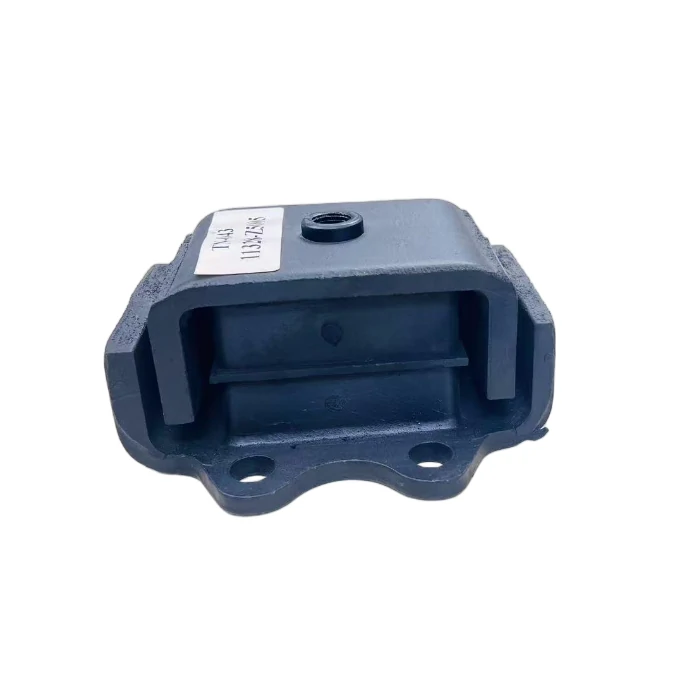
At its core, an engine mount is a structural isolator. It uses a combination of robust metal for strength and a flexible, energy-absorbing material—typically rubber or a fluid—to perform its dual role. It must be strong enough to hold the engine and transmission securely in place, resisting the immense torque generated during acceleration and braking. This prevents the engine from lurching, which could sever hoses, damage wiring, or misalign the drivetrain. Simultaneously, it must be pliable enough to absorb the constant, high-frequency vibrations produced by the engine, preventing them from traveling through the vehicle's frame and into the cabin. This latter function is a key aspect of managing what automotive engineers refer to as Noise, Vibration, and Harshness (NVH), a critical factor in perceived vehicle quality (Genta & Morello, 2009). A vehicle with low NVH feels smooth, quiet, and refined, while one with high NVH feels rough and poorly constructed. The humble engine mount is a frontline soldier in this battle for refinement. Understanding its function is not merely a technical exercise; it is an appreciation for the elegant engineering that makes modern transportation possible.
The Evolution of a Concept
The earliest automobiles had very rudimentary mounting systems. Often, the engine was bolted directly to the frame, or with only a simple block of wood or leather to provide minimal cushioning. The result was a driving experience that was anything but smooth. The entire vehicle would shake in sympathy with the engine's sputtering rhythm. As engines became more powerful and vehicle speeds increased, the need for a more sophisticated solution became apparent. This led to the development of rubber mounts in the early 20th century. By using vulcanized rubber, engineers could create a component that was both strong and flexible, a significant leap forward in NVH control.
Over the decades, as our understanding of material science and vibration dynamics has grown, so too has the complexity of the engine mount. The simple rubber block has evolved into a range of specialized designs, each tailored for different applications and performance characteristics. From solid rubber mounts to advanced, computer-controlled hydraulic and active mounts, the journey of this component mirrors the broader story of automotive innovation. Each advancement represents a deeper engagement with the fundamental question of how to reconcile the raw power of the engine with the human need for comfort and control. This article will explore these designs, delve into the specific mechanics of their operation, and, most critically, equip you with the knowledge to recognize when this silent guardian is crying out for help.
The Anatomy of Support: A Look at Engine Mount Designs
To truly grasp what engine mounts do, we must first appreciate that they are not a one-size-fits-all solution. The specific design of a mount is a carefully considered engineering choice, balancing factors like cost, performance, durability, and the specific NVH characteristics of the vehicle it's designed for. A mount for a small passenger car will be vastly different from one designed for a heavy-duty commercial truck, which must manage far greater torque and lower-frequency vibrations. Let's explore the primary categories of engine mounts you are likely to encounter.
Conventional Rubber Mounts
This is the most common and traditional type of engine mount. It consists of two metal attachment points—one connecting to the engine block and the other to the vehicle’s frame—separated by a block of specially formulated rubber.
- Construction: The rubber is the star of the show. It is not just any rubber; it is an elastomer chosen for its specific durometer (hardness) and damping characteristics. The rubber is bonded to the metal plates through a process of vulcanization, creating a single, robust unit.
- Function: The rubber flexes to absorb vibrations, converting the kinetic energy of the vibration into a small amount of heat. Its simplicity is its strength. It is cost-effective, reliable in a wide range of conditions, and provides a good balance of engine control and vibration isolation for many standard applications.
- Limitations: A simple rubber mount has a fixed stiffness. This means it is a compromise; it might be excellent at damping vibrations at idle but less effective at higher engine speeds, or vice versa. Over time, the rubber is susceptible to degradation from heat, oil, and ozone, leading to hardening, cracking, and eventual failure.
Hydraulic Mounts (Hydro-Mounts)
For vehicles requiring a higher level of refinement, engineers turn to hydraulic mounts. These are a significant step up in complexity and performance from their solid rubber counterparts. Think of a hydro-mount as a rubber mount with a sophisticated, fluid-filled secret.
- Construction: A hydro-mount still uses rubber for its primary structure and isolation, but its core is hollow and filled with a glycol-based or hydraulic fluid. Inside, there are two fluid chambers connected by a small channel or orifice. A rubber diaphragm or bellows allows the fluid to move between chambers.
- Function: This design allows for variable damping. At low engine speeds, such as idling, the engine produces low-frequency, high-amplitude vibrations. The fluid moves easily between the chambers, allowing the mount to be "soft" and effectively absorb these large movements. At higher engine speeds, the vibrations are of a higher frequency and lower amplitude. The fluid cannot pass through the orifice quickly enough, causing the mount to stiffen and effectively damp these smaller, faster vibrations (Mohamed et al., 2018). This variable response allows for superior NVH control across the engine's entire operating range.
- Limitations: The added complexity makes them more expensive to manufacture. They are also prone to failure through fluid leakage. If the internal diaphragm ruptures, the fluid escapes, and the mount loses its damping properties, often becoming noisier than a failed rubber mount.
Active and Semi-Active Mounts
Found at the premium end of the automotive spectrum, active mounts represent the pinnacle of current NVH control technology. They take the principle of the hydraulic mount and add a layer of electronic intelligence.
- Construction: An active mount incorporates sensors, an electronic control unit (ECU), and an actuator. Semi-active mounts can change their damping properties, while fully active mounts can generate a counter-vibration to cancel out the engine's vibrations. This can be achieved through vacuum-actuated changes to the fluid path (in semi-active systems) or through an electromagnetic actuator that creates an opposing force (in fully active systems).
- Function: The vehicle's ECU receives input from sensors that monitor engine speed, throttle position, and road conditions. It then calculates the precise vibrational frequency being produced by the engine at that moment. The ECU instructs the actuator in the mount to either adjust its damping rate or to generate an out-of-phase vibration that effectively cancels out the engine's vibration before it reaches the chassis. The result is an exceptionally smooth and quiet ride.
- Limitations: The complexity and cost of these systems are substantial, which is why they are typically reserved for luxury and high-performance vehicles. They also introduce more potential points of failure, including sensors, wiring, and the control unit itself.
Polyurethane and Solid Mounts
On the opposite end of the spectrum from active mounts are polyurethane and solid mounts. These are primarily used in racing or high-performance applications where engine control is prioritized far above comfort.
- Construction: These mounts replace the flexible rubber with a much stiffer material, either a hard polyurethane elastomer or, in the case of solid mounts, metal (like aluminum).
- Function: The goal here is to minimize engine movement. By creating an almost rigid connection between the engine and the frame, these mounts ensure that the maximum amount of torque is transferred to the wheels without being lost to engine flex. This improves throttle response and stability during aggressive driving.
- Limitations: The trade-off is a massive increase in NVH. Nearly all of the engine's vibration is transmitted directly into the vehicle's cabin, resulting in a loud and harsh ride that would be unacceptable for a daily driver.
| Feature | Rubber Mount | Hydraulic Mount | Active Mount | Polyurethane/Solid Mount |
|---|---|---|---|---|
| Primary Material | Vulcanized Rubber | Rubber and Hydraulic Fluid | Rubber, Fluid, Electronics | Polyurethane or Solid Metal |
| Damping Method | Passive (Material Flex) | Passive, Frequency-Dependent | Active (Electronically Controlled) | Minimal (Material Stiffness) |
| NVH Control | Good | Excellent | Superior | Poor |
| Performance Focus | Balance of Comfort & Control | Enhanced Comfort | Maximum Comfort & Refinement | Maximum Engine Control |
| Cost | Low | Moderate | High | Low to Moderate |
| Common Application | Standard Passenger & Commercial Vehicles | Mid-Range to Luxury Vehicles | High-End Luxury & Performance Vehicles | Racing & High-Performance Vehicles |
| Common Failure Mode | Cracking, Hardening | Fluid Leakage, Rubber Cracking | Electronic Failure, Fluid Leakage | Increased NVH (by design) |
The Dual Mandate: Understanding What Engine Mounts Do
We've established that engine mounts have two main jobs, but to truly appreciate their importance, we need to examine these roles with the precision of an engineer. The success of a vehicle's design hinges on how well these components execute their dual mandate: securing the powertrain and controlling NVH. These are not separate tasks but are deeply intertwined.
The First Mandate: Securing the Powertrain and Managing Torque
This is the most fundamental role of an engine mount. The engine and transmission assembly—the powertrain—is one of the heaviest and most dynamic components in a vehicle. It must be held in a precise orientation relative to the rest of the car.
Resisting Static Weight
The most obvious job is simply to support the immense weight of the engine and transmission, preventing them from falling onto the ground. This is achieved through the structural metal components of the mount, which are bolted securely to both the engine block and the subframe or chassis rails of the vehicle.
Counteracting Dynamic Forces
The more complex task is managing the dynamic forces the engine produces when it is running. The most significant of these is rotational torque. According to Newton's third law of motion, for every action, there is an equal and opposite reaction. When the engine's crankshaft rotates in one direction to send power to the wheels, it exerts an equal and opposite twisting force on the engine block itself. This force is known as torque reaction.
- During Acceleration: When you press the accelerator, the engine produces significant torque. This causes the entire engine block to try to rotate in the opposite direction of the crankshaft. The engine mounts must be strong enough to resist this twisting force, keeping the engine firmly in place. If they were to fail, the engine could lurch violently, potentially by several inches.
- During Deceleration: A similar, though often less intense, effect happens during engine braking or aggressive downshifting. The momentum of the vehicle is now acting back on the engine, causing it to twist in the opposite direction.
- The "Torque Axis": Vehicle engineers often speak of a "torque axis," an imaginary line running through the powertrain around which these rotational forces occur. The placement and angle of the engine mounts are carefully calculated to effectively brace the engine against rotation around this axis. Typically, you will find one mount on either side of the engine, often with a third or fourth mount (sometimes called a torque strut or "dog bone") positioned to specifically counteract this twisting motion.
Failure to manage these forces would lead to a cascade of problems. The violent movement of the engine could damage the radiator fan, sever electrical wiring, break coolant hoses, and place immense stress on the exhaust system and driveshaft, leading to premature failure of those components. In essence, the mounts act as the engine's anchor, ensuring its power is channeled productively to the wheels, not wasted in uncontrolled movement.
The Second Mandate: Damping Vibration and Controlling NVH
This is the role that directly impacts the driver's and passengers' perception of the vehicle's quality. While securing the engine is about safety and mechanical integrity, damping vibration is about comfort and refinement. An internal combustion engine is an inherently vibratory machine.
Sources of Engine Vibration
Vibrations in an engine originate from several sources, which can be categorized by their frequency.
| Vibration Source | Frequency Range | Description | How Mounts Respond |
|---|---|---|---|
| Engine Shake | Low (5-25 Hz) | Caused by the entire engine moving on its mounts due to torque pulses, especially at idle or low RPM. This is a large, slow movement. | "Soft" mounts, especially hydraulic ones, allow the engine to move slightly, absorbing the energy. |
| Combustion Pulses | Mid (25-200 Hz) | The individual firing of each cylinder creates a series of sharp, rhythmic pulses. This is what you feel as a "rumble." | The rubber or fluid in the mount flexes rapidly to absorb and dissipate these pulses. |
| Rotating Components | High (>200 Hz) | Unbalanced forces from the crankshaft, pistons, and other rotating parts create high-frequency vibrations perceived as audible noise or a "buzz." | The mount material must be stiff enough at these high frequencies to prevent the vibration from passing through to the frame. This is where hydraulic mounts excel. |
The Physics of Isolation and Damping
Engine mounts combat these vibrations using two key principles:
- Isolation: This is the idea of separating the source of the vibration (the engine) from the structure you want to keep still (the vehicle's frame). The flexible element of the mount (the rubber or fluid) acts as a barrier. For a mount to be an effective isolator, its natural frequency must be significantly lower than the frequency of the vibration it is trying to isolate (Snowdon, 1979). This is why a "soft" mount is good for isolating low-RPM engine shake.
- Damping: This is the process of dissipating vibrational energy, usually by converting it into heat. The rubber in a mount doesn't just flex; its internal friction creates a damping effect. In a hydraulic mount, the movement of fluid through the restrictive orifice is the primary source of damping. Damping is crucial for controlling the engine's movement when it passes through a resonant frequency—a frequency at which the vibrations can become amplified and uncontrolled.
The genius of a well-designed engine mount system is its ability to provide both isolation and damping across a wide range of frequencies. It must be soft enough at certain frequencies to isolate movement but stiff and well-damped at others to control it. This is the delicate balancing act that engineers strive to perfect. Failure in this role doesn't just lead to an uncomfortable ride; the uncontrolled vibrations can cause metal fatigue in the vehicle's structure and lead to the premature failure of other electronic and mechanical components. Therefore, the answer to "what do engine mounts do?" is that they perform a critical, continuous negotiation between the raw forces of the engine and the structural integrity and comfort of the vehicle.
Symptom 1: A Symphony of Shakes and Shudders
This is often the very first clue that an engine mount is beginning to falter, and it is the symptom most directly related to the mount's primary job of vibration damping. When a mount wears out, its ability to absorb and isolate the engine's natural vibrations is compromised. These vibrations, which were once silently managed under the hood, now find a pathway into the vehicle's chassis and, ultimately, to you, the driver. It’s like a faulty volume knob; the engine's operational noise, which should be turned down, is suddenly broadcast throughout the vehicle.
The Subjective Experience: What It Feels Like
The sensations can be subtle at first, easily dismissed as a rough road or an engine in need of a tune-up. However, as the mount degrades further, the symptoms become unmistakable.
- At Idle: You might notice a pronounced vibration through the steering wheel, the floorboards, or even the seat itself when the vehicle is stopped but the engine is running, for instance, at a traffic light. In a vehicle with healthy mounts, the idle should be almost imperceptible. With a failed mount, it can feel as if the entire car is humming or shuddering in time with the engine.
- During Acceleration: As you accelerate, the vibrations may change in intensity or frequency. You might feel a deep shudder or a coarse rumble that seems to emanate from the engine bay. This is because the engine is under greater load and producing more powerful torque and combustion pulses.
- Inconsistent Vibrations: The shaking might not be constant. It may be more noticeable when the transmission is in "Drive" or "Reverse" than in "Neutral" or "Park." This is because engaging the transmission puts a load on the powertrain, causing it to shift slightly and press against the weakened mount in a way that transmits more vibration. You might also notice it more when the air conditioning compressor kicks on, as this also adds a load to the engine.
Think of it this way: a healthy engine mount is like a skilled musician playing a damping instrument in an orchestra, perfectly absorbing the unwanted sounds. A failing mount is like that musician having walked off stage, leaving the harsh, untamed sounds of the engine to resonate throughout the concert hall—your vehicle's cabin.
The Technical Cause: Why It Happens
The root cause of this increased vibration is the degradation of the mount's flexible element.
- For Rubber Mounts: The rubber has likely become hard and brittle with age, heat, and exposure to engine fluids. Hardened rubber loses its elasticity and can no longer effectively flex to absorb vibrations. Instead of absorbing them, it transmits them directly to the frame. Alternatively, the rubber may have become too soft or has torn, allowing for excessive movement that also results in shuddering.
- For Hydraulic Mounts: The most common failure is a leak. Once the internal fluid has escaped, the mount loses its frequency-dependent damping capability. It essentially reverts to being a hollow rubber block, which is not what it was designed for. In many cases, a failed hydraulic mount will transmit even more noise and vibration than a simple worn rubber mount because the empty internal chamber can act as an amplifier for certain frequencies.
Diagnosis and Confirmation
If you suspect a bad mount is the cause of your vehicle's newfound shaking, there are a few ways to confirm your suspicions.
- The "Brake Torque" Test: This is a classic diagnostic technique, but it must be performed with extreme caution and preferably with an assistant. In a safe, open area with no obstructions, start the engine, hold the brake pedal down firmly with your left foot, and put the transmission into "Drive." Gently apply a small amount of throttle with your right foot for just a second or two. Have your assistant watch the engine. A healthy engine will flex slightly, perhaps an inch or so. An engine with a failed mount will often lift or lurch dramatically as it strains against the broken mount. Repeat the process in "Reverse." This test puts the mounts under the same torque loads they experience during driving, making excessive movement easy to spot.
- Varying the Load: While parked, notice the level of vibration at idle. Then, turn on all heavy electrical loads, like the air conditioning on high, the headlights, and the rear defroster. If the vibration noticeably increases, it's a strong indicator that the mounts are not handling the change in engine load correctly.
- Listen and Feel: Pay close attention to where the vibration seems to be coming from. While this is not a definitive test, vibrations from a bad engine mount often feel "deep" and structural, resonating through the floor and steering column, as opposed to the high-frequency buzz of a misfiring cylinder, which might feel more localized to the engine itself.
Ignoring this symphony of shakes is not advisable. The constant, excessive vibration not only makes for an unpleasant driving experience but also accelerates wear on countless other components, from electrical sensors to the vehicle's interior trim. It is the vehicle's way of telling you that a critical support system is compromised.
Symptom 2: The Troubling Clunks and Thuds from Under the Hood
While excessive vibration is a sign of a mount that has lost its damping ability, loud impact noises often indicate a mount that has lost its securing ability. These are not the rhythmic rumbles of an unbalanced engine; they are sharp, distinct sounds—clunks, bangs, or thuds—that correspond with sudden changes in the powertrain's load. If vibrations are the engine's constant grumbling, these impact noises are its sudden shouts of protest.
The Subjective Experience: What It Sounds Like
These sounds are often alarming to a driver because they sound like something is seriously broken or has come loose. They are most likely to occur during moments of significant torque change.
- Shifting Gears: You might hear a loud "clunk" or "thump" when you shift the transmission from "Park" to "Drive" or "Reverse." This is the sound of the entire engine and transmission assembly lurching and hitting its limit of travel because the failed mount is not holding it securely.
- Hard Acceleration: Stomp on the accelerator from a stop, and you might be greeted with a startling "bang" from the engine bay. This is the sound of the engine block violently twisting under torque and its metal bracket striking against the vehicle's frame.
- Abrupt Braking: Sudden, hard braking can also produce a clunk as the momentum of the powertrain causes it to surge forward, with the failed mount allowing it to make contact with other components.
- Rough Roads: Driving over potholes or speed bumps can cause the engine to bounce excessively within the engine bay, resulting in a series of clunks and rattles as the loose assembly shifts around.
Imagine carrying a heavy bowling ball inside a cardboard box. If you hold the box steady, it's fine. But if you suddenly start or stop walking, the ball will slam against the inside of the box, making a loud thud. This is precisely what is happening with your engine. The mount, which should be holding it snugly, has failed, and the engine's inertia is causing it to slam against its physical limits.
The Technical Cause: Why It Happens
These impact noises are almost always the result of a catastrophic failure of the mount, where the connection between the engine and the frame is no longer properly constrained.
- Complete Separation: In a rubber mount, the rubber may have torn completely in two. The two metal halves of the mount are no longer connected by the flexible medium. This allows the engine to lift or shift dramatically under load. The "clunk" is the sound of the metal part of the engine's bracket hitting the metal part of the frame's bracket.
- Extreme Degradation: In both rubber and hydraulic mounts, the flexible material may have degraded and collapsed to such an extent that there is a significant gap. This allows for an excessive range of motion before the engine's movement is checked, resulting in a metallic impact at the end of its travel.
- Failed Torque Strut: Many vehicles, especially those with transverse-mounted engines, use an upper or lower torque strut (often called a dog-bone mount) specifically to control the rotational torque of the engine. These are often the first to fail and are a common culprit for clunking noises during acceleration and shifting, even if the main weight-bearing mounts are still partially functional.
Diagnosis and Confirmation
Diagnosing impact noises follows a similar path to diagnosing vibrations, with a greater emphasis on spotting the excessive movement that causes the sound.
- Repeat the "Brake Torque" Test: This test is even more effective for diagnosing impact noises. As you gently apply throttle with the brakes on, you are not just looking for movement—you are listening for the distinct "clunk" as the engine hits its limit. This is a definitive sign of a failed mount. Be extremely cautious, as an engine with a completely failed mount can move violently.
- Visual Inspection for Impact Marks: Open the hood and use a strong flashlight to carefully inspect the area around each engine mount. Look for shiny, scraped, or dented areas on the frame, the engine block, or the mount brackets themselves. These are telltale signs that two metal components have been making forceful contact where they shouldn't.
- Pry Bar Test: With the engine off, a mechanic can use a long pry bar to gently attempt to move the engine. By carefully levering between the engine and the frame near a mount, they can feel for excessive play. A good mount will allow only a very small amount of flex; a failed mount will often allow for a significant, clunky movement. This should only be done by someone who knows the proper leverage points to avoid damaging other components.
These clunks and thuds are more than just annoying sounds. They are the audible evidence of uncontrolled, forceful impacts happening within your engine bay. Each impact sends a shockwave through the vehicle and places immense stress on the engine itself, the transmission, the axles, and the frame. It is an urgent warning that must be heeded to prevent severe and expensive secondary damage. When sourcing replacements, it's wise to consult a reputable truck parts manufacturer to ensure the new parts meet or exceed original specifications.
Symptom 3: The Telltale Dance of a Loose Engine
While vibrations are felt and impact noises are heard, this third symptom is all about what you can see. A healthy engine should remain relatively still during operation, with only a slight, controlled shimmer. When an engine mount fails, particularly one of the main weight-bearing mounts, the engine can appear to be "dancing" or shaking excessively within the engine bay. This is the most direct visual evidence you can get of a mount failure.
The Subjective Experience: What It Looks Like
You don't have to be a trained mechanic to spot this. The movement is often obvious and alarming to anyone who opens the hood while the engine is running.
- The Idle Shake: At idle, instead of a gentle hum, the engine may visibly rock back and forth or from side to side. The plastic engine cover, air intake box, and other components attached to the engine will be shaking noticeably.
- The Start-Up and Shut-Down Lurch: The moments of starting and stopping the engine are when the most dramatic movements can occur. As the engine roars to life, it might give a violent kick or lurch. Similarly, when you turn the key off, instead of smoothly winding down, the entire assembly might shudder and buck as it comes to a stop.
- The Revving Jump: With the vehicle in "Park" or "Neutral," have an assistant briefly rev the engine while you watch. A healthy engine will remain stable, perhaps tilting slightly. An engine with a bad mount will often jump or twist significantly in response to the throttle input. This is the visible manifestation of the engine trying to rotate against its broken anchor.
Imagine a ship tied to a dock with a frayed rope. In calm waters, it might just drift back and forth a bit. But when a big wave (the engine revving) comes, the ship will lurch violently against the weak rope. This is the "dance" of a poorly secured engine. The mount is the frayed rope, unable to properly restrain the forces acting upon it.
The Technical Cause: Why It Happens
Visible engine movement is a direct consequence of the loss of physical constraint. The mount is no longer defining the engine's proper location and range of motion.
- Collapsed Mount: The rubber or hydraulic element has compressed or degraded to the point where it no longer supports the engine's weight correctly. The engine may be visibly sagging on one side, sitting lower in the engine bay than it should. This incorrect positioning allows for a much greater range of motion.
- Separated Mount: As with impact noises, a completely torn or separated mount is a primary cause. The engine is essentially free to move until it is stopped by a secondary component or the limits of its mounting bracket. This allows for the most dramatic and damaging movements.
- Loss of Damping: Even if the mount is not completely broken, the loss of its damping properties contributes to visible shaking. Damping is what controls the rate of movement. Without it, the engine can oscillate more freely and visibly, even if it isn't making hard contact with the frame. A failed hydraulic mount, for example, can lead to a bouncy, uncontrolled engine movement.
Diagnosis and Confirmation
Confirming excessive engine movement is primarily a visual task. The key is to have a baseline of what normal movement looks like. If possible, compare the movement in your vehicle to that of an identical model known to have good mounts.
- The Observational Test: This is the simplest and most effective test. Start the engine and open the hood. Observe the engine at idle. Watch for any rocking or shaking that seems excessive. Look at stationary components on the firewall or inner fenders as a reference point. The gap between the engine and these parts should remain relatively constant.
- The Assisted Rev Test: As described above, have a helper sit in the driver's seat and briefly rev the engine (while in Park or Neutral) in short bursts. Watch for how the engine reacts. Does it twist smoothly and slightly, or does it jump and lurch? The difference between a controlled tilt and an uncontrolled jump is the key diagnostic indicator.
- The Brake Torque Test (Visual Edition): This test is the gold standard. When your assistant is performing the brake torque test, your job is not to listen for clunks but to watch the engine's movement. You will be able to see exactly which direction the engine is lifting or twisting, which can help pinpoint which specific mount has failed. For example, in a typical front-wheel-drive car, when in "Drive," the top of the engine will try to rotate towards the back of the car. If the rear-most mount (often called the transmission mount) is bad, you will see the engine lift up significantly.
A dancing engine is a clear and present danger to the health of your vehicle. This uncontrolled movement puts enormous strain on every single connection to the engine: coolant hoses, power steering lines, A/C lines, the wiring harness, the air intake system, and the entire exhaust from the manifold to the tailpipe. Each lurch and shudder is stretching, twisting, and fatiguing these components, leading to a high probability of leaks, electrical faults, and cracked pipes. Addressing the failed mount is not just about stopping the dance; it's about preventing the entire party of connected components from coming crashing down.
Symptom 4: The Ripple Effect on Drivetrain and Performance
The consequences of a failed engine mount are not confined to the engine bay. Because the engine and transmission are a single unit, their misalignment can send a disruptive ripple effect through the entire drivetrain—the system of components that delivers power to the wheels. This can manifest as a general degradation in the vehicle's driving characteristics and can sometimes be mistaken for a transmission problem.
The Subjective Experience: What It Feels Like
These symptoms are often more subtle than a loud clunk or a violent shudder, but they point to a fundamental misalignment in the vehicle's core components.
- Rough Shifting: You might notice that the automatic transmission's shifts are no longer smooth. They may feel jerky, hesitant, or clunky. This can be especially noticeable during downshifts when you are slowing down.
- Difficulty Engaging Gears: In a manual transmission vehicle, it might become more difficult to shift into certain gears. The shifter may feel notchy or refuse to go into gear smoothly. This happens because the misalignment between the engine/transmission unit and the chassis is putting a bind on the shift linkage.
- Driveline Vibration: You might feel a new vibration that seems to come from the center or rear of the vehicle, especially at certain speeds. This is different from the engine vibration felt at idle. It's a rotational vibration caused by the driveshaft or CV axles operating at incorrect angles.
- A "Loose" Feeling: The vehicle may just feel less "tight" or responsive than it used to. There might be a slight delay or a soft "thump" between applying the throttle and feeling the vehicle respond. This is the slack from the broken mount being taken up before power is effectively transferred.
Think of the drivetrain as a chain. For the chain to work smoothly, every link must be perfectly aligned. The engine mounts are what ensure the first link (the engine and transmission) is in the correct position. When a mount fails, that first link is now crooked, causing the entire chain to bind, jerk, and wear out prematurely.
The Technical Cause: Why It Happens
These performance issues are all rooted in the geometry of the powertrain. The engine, transmission, and axles are designed to operate at very specific angles relative to each other. A failed mount disrupts this critical alignment.
- Misaligned Axles: The output shafts of the transmission connect to the axles (either CV axles in a front-wheel-drive car or a driveshaft in a rear-wheel-drive truck). These joints are designed to operate within a certain angular tolerance. When a bad mount allows the engine and transmission to sag or shift, it forces these joints to operate at a more extreme angle than they were designed for (Genta & Morello, 2009). This causes them to bind, which leads to rough shifting sensations and vibrations.
- Stressed Shift Linkage: In both automatic and manual transmissions, there is a physical linkage (either a cable or a series of rods) that connects the gear selector in the cabin to the transmission itself. When the transmission's position changes due to a failed mount, it stretches or binds this linkage, making it difficult for the transmission to receive the correct input from the driver.
- Driveshaft Angle: In rear-wheel-drive or all-wheel-drive trucks, the angle of the driveshaft is critical. A change in the transmission's position due to a broken rear mount can alter the operating angles of the universal joints (U-joints) at either end of the driveshaft. This is a very common cause of high-speed driveline vibrations and can lead to rapid failure of the U-joints.
Diagnosis and Confirmation
Diagnosing these symptoms requires differentiating them from actual transmission or axle problems, which can be tricky.
- Correlate with Other Symptoms: The key is to see if these drivetrain issues are accompanied by the more classic signs of a failed mount, such as excessive engine vibration at idle or clunking noises. If you have a driveline vibration and a clunk when you shift into gear, a bad mount is a very likely suspect. If you only have the vibration, the problem might be elsewhere, such as an unbalanced tire or a failing U-joint.
- Visual Inspection of Axles and Linkages: Get under the vehicle (safely, on jack stands) and look at the components. Check the rubber boots on the CV axles for any signs of stretching or tearing, which could be caused by over-extension. Look at the shift linkage where it connects to the transmission; does it appear to be at a sharp, unnatural angle?
- Check for Leaks: While you are under the vehicle, look for any fluid leaks from the transmission output shaft seal or the axle seals. A misaligned drivetrain puts extra stress on these seals, often causing them to fail and leak.
The ripple effect is a serious concern. The constant stress of operating at incorrect angles will rapidly wear out CV joints, U-joints, and transmission seals. In severe cases, the binding can even cause internal damage to the transmission itself. What starts as a relatively inexpensive engine mount replacement can quickly escalate into a multi-thousand-dollar drivetrain repair if the initial problem is not addressed. This demonstrates how a seemingly simple piece of rubber and metal is, in fact, a cornerstone of the vehicle's entire mechanical harmony.
Symptom 5: A Direct Look at Wear, Tear, and Damage
While the other symptoms are indirect clues—sounds and feelings caused by the failure—this final symptom is the direct, visual confirmation of the problem. It involves physically inspecting the engine mounts themselves for signs of aging, stress, and outright failure. For a mechanic or a diligent owner, this is often the concluding piece of the diagnostic puzzle. It is the equivalent of finding the smoking gun.
The Subjective Experience: What It Looks Like
A visual inspection requires a good flashlight, and sometimes a small mirror, to see the mounts, which can often be tucked away in tight spaces. You are looking for any deviation from what a new mount would look like.
- Cracks and Fissures: The most common sign of age on a rubber mount is the appearance of cracks. These can range from small, superficial surface cracks (often called "weather checking") to deep fissures that penetrate through the rubber block. Any significant cracking is a sign that the rubber has lost its integrity.
- Bulging or Sagging: Look at the posture of the mount. A failing mount may bulge out on the sides as the engine's weight compresses the weakened rubber. More commonly, you will see that the engine bracket is sagging and sitting lower on the mount than it should, often closing the gap that is designed to be there for movement. The mount may look flattened or squashed.
- Fluid Leaks (for Hydraulic Mounts): This is a dead giveaway for a failed hydraulic mount. Look for dark, oily residue on the mount itself and on the subframe or chassis directly underneath it. The leaked fluid is often thick and greasy, and it will attract dirt, making the area look dark and grimy. A leaking hydro-mount has lost all its special damping abilities.
- Complete Separation: In the most extreme cases, you will be able to see a complete tear through the rubber. The two metal halves of the mount may be completely separated, or only hanging on by a thread. You might even be able to see a significant gap where the rubber used to be.
- Shiny or Scraped Metal: As mentioned before, look for shiny spots on the metal brackets of the mount or on the nearby frame. This indicates that the engine has been moving so much that metal-on-metal contact has occurred, which should never happen with a healthy mount.
The Technical Cause: Why It Happens
The physical degradation of an engine mount is an inevitable process, but its rate is influenced by various factors.
- Heat Cycles: The engine bay is a harsh environment with extreme temperature swings. Over thousands of cycles of heating up and cooling down, the rubber elastomers lose their plasticizers, become brittle, and lose their flexibility. This process, known as thermal aging, is a primary driver of mount failure (Datta & Loh, 2013).
- Fluid Contamination: Engine oil, power steering fluid, and other automotive chemicals are highly destructive to the type of rubber used in many mounts. A slow oil leak from a valve cover gasket that drips onto an engine mount will dramatically shorten its life, turning the rubber soft and spongy until it eventually dissolves and fails.
- Ozone and UV Exposure: Environmental factors also play a role. Ozone in the air is a powerful oxidizing agent that attacks the molecular bonds in rubber, leading to the surface cracking known as weather checking.
- Stress and Fatigue: Every time you accelerate, brake, or hit a bump, the mounts are put under stress. Over millions of cycles, this can lead to fatigue failure in either the rubber material or, less commonly, the metal brackets themselves. Aggressive driving habits will accelerate this process.
Diagnosis and Confirmation
A visual inspection is the most definitive way to confirm a bad mount.
- Locate the Mounts: First, you need to know where to look. A repair manual for your specific vehicle is invaluable here. Generally, in a front-wheel-drive car, there will be a mount near the timing belt/accessory belt side of the engine, a transmission mount under the battery, and a torque strut or "dog bone" mount at the top or bottom, connecting the engine to the firewall or subframe. In a rear-wheel-drive truck, there are typically two main mounts, one on each side of the engine block, and a separate transmission mount at the rear of the transmission.
- Use a Bright Light: The engine bay is full of shadows. A powerful flashlight is essential. Shine the light on all sides of each mount. Look at the top, bottom, and sides.
- Use a Mirror: For mounts that are hard to see, an inspection mirror on a telescoping handle can allow you to see the hidden side of the mount, which is often where failures begin.
- Combine with Movement Tests: The best diagnosis combines a visual inspection with a movement test. While an assistant performs the "Brake Torque Test," you can watch the mounts directly. You will be able to see a failing mount stretch, compress, or separate under load. This removes all doubt. For example, you might see a large crack in a mount open up wide when the engine is torqued, confirming that the crack is indeed a critical failure.
Seeing a physically damaged mount is the final piece of evidence. It transforms the diagnosis from a suspicion based on sounds and feelings into a certainty based on physical proof. It confirms that the component's structural integrity is compromised and that replacement is not just recommended but necessary for the safety and longevity of the vehicle. When that time comes, selecting high-quality undercarriage parts is paramount to restoring the vehicle's original stability and comfort.
The Cascade of Neglect: Why Ignoring a Bad Mount Is a Costly Mistake
It can be tempting to ignore the early signs of a failing engine mount. A little extra vibration or an occasional clunk might seem like minor annoyances that can be put off. However, this perspective fails to appreciate the profoundly interconnected nature of a vehicle's mechanical systems. Neglecting a bad engine mount is like ignoring a crack in a dam; what starts as a small issue can lead to a catastrophic, system-wide failure. The initial cost of replacing a mount is a small fraction of the expense that can result from the cascade of damage it can cause.
The most immediate danger is to the components directly connected to the powertrain. With a failed mount, the engine and transmission are no longer held in their precise, engineered location. Every time you accelerate, brake, or turn, the entire assembly, weighing hundreds of pounds, is lurching and vibrating violently within the engine bay. This uncontrolled movement places immense and repeated stress on every single point of connection.
- Exhaust System Damage: The exhaust manifold is bolted directly to the engine, while the rest of the exhaust system is hung from the vehicle's chassis. The engine mounts are what allow the engine to move slightly without transferring that stress to the exhaust. When a mount fails, the engine's violent lurching can crack the exhaust manifold, break the flexible pipe (flex-pipe), or snap the hangers that support the rest of the system. A cracked manifold is an expensive and labor-intensive repair.
- Radiator and Hose Damage: The radiator is fixed to the car's frame, while the water pump is part of the engine. They are connected by flexible rubber coolant hoses. The excessive movement from a bad mount can stretch and fatigue these hoses, leading to leaks and the risk of overheating. In vehicles with a belt-driven cooling fan, the lurching engine can cause the fan to smash into the radiator shroud or the radiator itself, destroying both.
- Broken Belts and Pulleys: The engine's accessory drive belts power the alternator, power steering pump, and A/C compressor. A misaligned and vibrating engine can cause these belts to jump off their pulleys or wear out with incredible speed. The added stress can also lead to premature failure of the bearings within the pulleys and the accessories themselves.
- Drivetrain Wear: As discussed previously, the misalignment caused by a sagging or broken mount puts extreme stress on the constant velocity (CV) joints in a front-wheel-drive vehicle and the universal joints (U-joints) in a rear-wheel-drive truck. These components are forced to operate at angles they were never designed for, leading to rapid wear, vibration, and eventual failure. What was an engine mount problem now becomes a costly axle or driveshaft repair.
- Electrical and Sensor Issues: Modern engines are covered in sensitive electronic sensors and wrapped in a complex wiring harness. The constant, violent shaking can damage the delicate internal workings of these sensors and chafe through the insulation on wires, causing short circuits and a host of mysterious and hard-to-diagnose electronic gremlins.
Beyond the direct mechanical damage, there is a significant safety consideration. An engine that can move unpredictably can affect the vehicle's handling and stability. For example, a sudden shift in the engine's weight during a corner can upset the vehicle's balance. In a severe failure, the shift linkage to the transmission could bind, potentially leaving the vehicle stuck in gear or unable to engage "Park."
The financial logic is clear. The cost of replacing one or two engine mounts is a manageable maintenance expense. The potential cost of replacing a cracked exhaust manifold, a damaged radiator, a failed CV axle, and tracking down an electrical short caused by the neglect of those mounts can easily run into the thousands of dollars. The initial symptoms of a failing mount are not merely an annoyance; they are a critical warning from your vehicle. Heeding that warning promptly is the most economically sound and safest course of action.
Choosing Wisely: A Guide to Engine Mount Replacement
Once you have diagnosed a failed engine mount, the next step is to choose a suitable replacement. This decision is more significant than it might seem, as the quality and type of the new mount will directly determine the restoration of your vehicle's ride quality and the long-term protection of its related components. The market for automotive parts is vast, and making an informed choice is key to a successful repair.
OEM vs. Aftermarket
This is the classic dilemma for any part replacement.
- Original Equipment Manufacturer (OEM): These parts are made by the same company that supplied the original mounts to the vehicle manufacturer. They are, in theory, identical to the part that came on your vehicle from the factory. The primary advantage is guaranteed fitment and performance that matches the original design intent. The downside is that they are typically the most expensive option and are usually only available through dealership parts departments.
- Aftermarket: These parts are made by a wide variety of other companies. The quality can range from excellent to very poor.
- High-Quality Aftermarket: Reputable aftermarket manufacturers often reverse-engineer the OEM part and sometimes even improve upon the original design, addressing known failure points. They can offer OEM-level quality at a more competitive price. Sourcing components from a trusted truck parts manufacturer is crucial, as they specialize in the durability needed for commercial applications.
- Low-Quality Aftermarket: On the other end, there are cheap, mass-produced mounts that may look correct but use inferior rubber compounds and have poor manufacturing tolerances. These parts may fail in a fraction of the time of a quality part, and they often provide poor vibration damping from the moment they are installed. You might fix the "clunking" but be left with a car that vibrates more than it did before.
For a component as critical as an engine mount, opting for the cheapest available part is a false economy. The labor to install a mount is often the most significant part of the repair cost. Having to pay for that labor a second time when a cheap mount fails prematurely negates any initial savings. It is always wise to invest in a quality part from a reputable source.
Selecting the Right Type for Your Needs
It is almost always best to replace a mount with one of the same type that was originally installed.
- If your vehicle came with hydraulic mounts, it's because the engineers determined that level of variable damping was necessary to control the engine's specific NVH characteristics. Replacing a failed hydraulic mount with a cheaper, solid rubber mount will almost certainly result in a noticeable increase in cabin vibration and harshness.
- Conversely, "upgrading" a standard vehicle from rubber to polyurethane mounts for a perceived performance gain is usually a bad idea for a daily driven vehicle. While it will reduce engine movement, it will come at a severe cost in comfort, introducing a level of noise and vibration that most drivers would find intolerable. These mounts are best left for the racetrack.
The Importance of Replacing Mounts in Sets
Engine mounts wear out together. They are all subjected to the same heat, mileage, and stress cycles. If one mount has failed to the point of causing noticeable symptoms, it is highly likely that the other mounts are not far behind. While it might be tempting to replace only the one that is completely broken, this is often shortsighted.
The new, stiff mount will not have the same amount of "give" as the old, worn mounts. This places additional stress on the remaining old mounts, which can cause them to fail very quickly. Furthermore, to achieve the proper balance and NVH control, the entire system of mounts is designed to work together with similar stiffness and damping properties. For the best and most durable repair, it is highly recommended to replace the engine mounts as a complete set. While the upfront cost is higher, it saves on future labor costs and ensures the system functions as it was originally designed.
Making the right choice in a replacement mount is an investment in your vehicle's future. It ensures a return to the smooth, quiet operation you expect and provides the robust protection your powertrain and its associated components require.
Frequently Asked Questions (FAQ)
1. How long do engine mounts typically last?
The lifespan of an engine mount can vary widely depending on the type of mount, the vehicle, driving habits, and environmental conditions. Generally, you can expect a range of 5 to 10 years or 80,000 to 160,000 kilometers. Hydraulic and active mounts may have a shorter lifespan due to their complexity. Exposure to oil leaks, extreme heat, or consistently rough roads can cause them to fail much sooner.
2. Can I drive my truck with a bad engine mount?
While it may be physically possible to drive with a failing engine mount, it is strongly discouraged. A minor failure will cause uncomfortable vibrations and noise. A severe failure, where the mount has separated, is dangerous. The excessive engine movement can damage coolant hoses, wiring, and the exhaust system, potentially leaving you stranded. It can also negatively affect vehicle handling and stability, especially during emergency maneuvers.
3. What is the average cost to replace engine mounts?
The cost varies significantly based on the vehicle and the type of mount. The parts themselves can range from under a hundred dollars for a simple rubber mount to several hundred dollars for a single advanced hydraulic or active mount. The majority of the cost is often in the labor, which can take anywhere from one to several hours per mount, depending on its accessibility. Replacing a full set on a typical commercial truck could range from a few hundred to over a thousand dollars at a professional shop.
4. Is replacing an engine mount a DIY job?
For an experienced home mechanic with the right tools, replacing some engine mounts can be a DIY project. However, it often requires supporting the engine with a jack or an engine hoist, and access can be very tight. Some mounts may require the removal of other components to reach. Given the safety risks of working under a heavy engine, if you are not completely confident in your ability and equipment, it is a job best left to a professional technician.
5. Will bad engine mounts cause a "Check Engine" light?
Typically, a failing engine mount itself will not trigger a "Check Engine" light, as it is not an electronic sensor monitored by the ECU. However, the consequences of a bad mount can. For example, if the violent engine movement damages the wiring to a sensor (like an oxygen sensor or knock sensor), or causes a large vacuum leak by breaking a hose, that secondary failure will almost certainly illuminate the light.
6. How many engine mounts does a vehicle have?
Most modern vehicles have three or four mounts. In a typical front-wheel-drive layout, there is often one mount on the engine side, one on the transmission side, and one or two torque struts to control rotational movement. In a rear-wheel-drive truck, there are commonly two main mounts flanking the engine block and a separate mount supporting the rear of the transmission.
7. Can a bad engine mount feel like a transmission problem?
Yes, absolutely. The clunking noise when shifting gears or the jerky sensation during acceleration caused by a failed mount can be easily mistaken for an internal transmission issue. This is because the mount's failure allows the entire powertrain to lurch, creating a driveline shock that feels like a bad shift. It is always a good idea to inspect the engine mounts before assuming a costly transmission repair is needed.
Conclusion
The engine mount operates as a silent, steadfast mediator, managing the immense forces of the modern engine while preserving the integrity and comfort of the vehicle. Its dual function—to securely anchor the powertrain and to meticulously absorb its inherent vibrations—is fundamental to a safe, reliable, and pleasant driving experience. To understand what engine mounts do is to appreciate a cornerstone of automotive engineering that bridges the gap between raw power and refined control.
The signs of failure, from the subtle onset of a new vibration to the alarming clunk of a loose engine, are not mere annoyances. They are direct communications from the mechanical heart of your vehicle, signaling a compromise in a critical support system. Recognizing these symptoms is the first and most vital step in preventative maintenance. Acting upon them promptly by seeking diagnosis and replacement with high-quality components is not just a repair; it is an investment in the longevity of the entire vehicle. By respecting the crucial role of the humble engine mount, we ensure that the complex symphony of a vehicle's operation remains harmonious for many years and kilometers to come.
References
Datta, P., & Loh, W. K. (2013). Thermal aging of automotive elastomers. In W. K. Loh (Ed.), Applied Plastics Engineering Handbook (pp. 577-591). William Andrew Publishing.
Genta, G., & Morello, L. (2009). The automotive chassis: Volume 1: Components design. Springer.
Komatsu. (2025). 980E-5. Komatsu Ltd. Retrieved from
Michelin. (2025). Operating advice for truck, coach and bus tyres. Michelin. Retrieved from
Mohamed, E. S., El-Gawwad, K. A., & El-Demerdash, S. M. (2018). Characteristics of hydraulic engine mounts: A review. Journal of Terramechanics, 79, 29-40.
Snowdon, J. C. (1979). Vibration isolation: Use and characterization. U.S. Department of Commerce, National Bureau of Standards.
Track Loader Parts. (2023). Kubota SVL97-2 – Compact track loader. Retrieved from
ZF Aftermarket. (2025). Construction machinery. ZF Friedrichshafen AG. Retrieved from